Storm Fragments

I’m waiting for the day to never wake up, not because I have forgotten how beautiful the morning can be, but because somewhere between yesterday’s disappointments and tomorrow’s expectations, I became exhausted from pretending that being alive and feeling alive were the same thing. I have mastered the art of opening my eyes while keeping the rest of me asleep. I can smile with a mouth that has forgotten its language, answer questions with a voice that sounds convincingly human, and walk through a room full of people while feeling like a ghost haunting a house that no longer belongs to me. Nobody notices the little funerals happening inside a person who is still breathing. They see the body, the familiar face, the ordinary gestures, but they never think to ask what it costs to keep carrying a soul that has grown tired of its own weight.

There is a peculiar loneliness in being the person everyone assumes is fine. You become a dependable piece of furniture in other people’s lives, something they lean against when the world becomes unbearable, never considering that the wood might be splitting beneath their hands. You learn to swallow your sorrow without making a sound, to fold your disappointments into smaller and smaller pieces until they fit somewhere behind your ribs. Eventually, you forget what it feels like to speak without translating your pain into something acceptable. You become fluent in I’m tired, when what you really mean is that your spirit has been working overtime, that your heart has accumulated debts no amount of sleep can repay, that you are desperately searching for a reason to believe the next sunrise might offer something different from the last.

And the nights, God, the nights. They know everything. They know the names I no longer say aloud, the conversations I replay until their words lose their original meaning, the mistakes I have carried longer than some people carry their happiest memories. Darkness does not ask me to explain myself. It sits beside me like an old acquaintance who has witnessed every version of my unraveling and never once pretended to be surprised. I stare at the ceiling while the clock performs its small, merciless mathematics, measuring the distance between who I was and the stranger I sometimes find waiting in the mirror. Somewhere outside, the world continues its ridiculous insistence on moving forward. Cars pass. Dogs bark. Someone laughs. A refrigerator hums in the kitchen. Life carries on with an indifference that feels almost insulting when you are struggling to remember why you should carry on with it.

I wonder how many people have stood in the middle of an ordinary afternoon and quietly wished they could disappear from the responsibilities of being themselves. How many have sat at dinner tables, nodded through conversations, kissed the people they love, and hidden an entire universe of sadness behind the simple declaration that everything is okay. We are a species of beautifully disguised disasters, decorating our wounds with humor, dressing our insecurities in confidence, and calling our emotional starvation independence. We praise one another for being strong when perhaps what we need is permission to put the armor down. Sometimes strength is not another day of pretending. Sometimes strength is admitting that the weight has become too much and allowing another human being to help carry it.

I have spent too much of my life believing that I must be useful to be worthy of being loved. That I must provide something, fix something, create something, or endure something before I have earned the right to occupy space in another person’s heart. Even my sadness feels like an inconvenience, another unfinished responsibility I should have learned to manage by now. So I hide it beneath the ordinary debris of living, burying it beneath work, conversations, unfinished projects, and the thousand little obligations that keep a person occupied without necessarily keeping them whole. I become the architect of my own disappearance, not leaving the room but withdrawing the parts of myself that once made being there meaningful.

Perhaps that is what frightens me most: not that I have become sad, but that sadness has started to feel familiar. It has learned the layout of my house. It knows where I keep my memories and which floorboards creak beneath my footsteps. It sits at the breakfast table. It rides beside me in the car. It follows me into moments that should be happy, whispering that joy is temporary and disappointment has a permanent address. I know this voice is not the whole truth, but knowing something intellectually does not always make the heart believe it. A person can understand the weather forecast and still feel unprepared when the storm arrives.

Still, somewhere beneath all this accumulated darkness, there remains a small, stubborn part of me that has not surrendered its curiosity. It wonders whether there might be a morning when the light enters the room differently, when a familiar song reaches a place inside me that has been silent for too long, when someone’s unexpected kindness reminds me that I have not become as invisible as I sometimes feel. It wonders whether healing might arrive without trumpets or grand revelations, appearing instead as a cup of coffee shared in comfortable silence, a conversation in which I no longer have to pretend, or an afternoon when the future feels less like a punishment and more like an unwritten page.

I do not know when that morning will come. I am not going to insult my own exhaustion by pretending that a few hopeful sentences can dismantle years of accumulated hurt. Some wounds require more than patience; they require honesty, companionship, and the courage to ask for help before the darkness convinces us that we are beyond helping. I am learning that I do not have to solve my entire life tonight. I do not have to manufacture happiness or force myself to become the person everyone remembers. Perhaps I only need to make room for the possibility that the person I am today deserves the same tenderness I would offer someone else who was hurting.

So, yes, there are nights when I am waiting for the day to never wake up, when the thought of facing another morning feels heavier than the darkness surrounding me. But perhaps what I am truly waiting for is the day I no longer have to fight so hard to exist inside my own life. The day I can tell the truth without apologizing for it. The day I stop confusing silence with peace and endurance with healing. The day I understand that I can be exhausted without being defeated, broken without being worthless, and uncertain without being beyond redemption.

Until then, I will try to remain here for the unfinished things. For the words still waiting inside me, for the people who might need to hear that someone understands, for the small and unremarkable moments that have not yet revealed their meaning. I will try to remember that even the darkest chapter is still a chapter, not necessarily the final page. And if I cannot believe in a beautiful tomorrow, perhaps I can borrow enough belief to make it through tonight.

Maybe that is how we survive sometimes: not through grand declarations of courage, but through tiny acts of staying. One breath. One conversation. One honest admission that we are not okay. One hand extended toward someone who might understand.

I am tired of pretending the darkness does not exist.

I am tired of being the person who knows how to help everyone except himself.

I am tired of waking up carrying yesterday’s ghosts.

But somewhere beneath the exhaustion, beneath the sorrow, beneath all the words I have used to disguise what I cannot bear to say aloud, there is still a heartbeat. Quiet. Imperfect. Uncertain.

For tonight, I will listen to it.

Not because I have found all the answers, but because I have not yet discovered everything this life might still give me.

And perhaps, for now, that is enough.

The Raven’s Poison

Every book has a beginning.

Sometimes it begins with an idea, a dream, or a single sentence. For me, The Raven’s Poison began long before I ever knew I was writing a book. In fact, it began before I even understood that what I was writing was poetry.

I grew up with my mother constantly in and out of the hospital. My parents were divorced, my sister was the oldest, and I was the youngest. My mother needed a liver transplant, and although the transplant gave her years she otherwise might not have had, the medications she took over time eventually damaged her kidneys.

When I was young, I remember being told, “She won’t live long.”

Those words stayed somewhere inside me.

Yet my mother defied that expectation. She became the longest-living recipient of a liver transplant at the time, living for twelve years after her transplant. She passed away in 1994.

I was twenty years old.

When I was fourteen, I moved in with my father. I still remember sitting in the car with my mother when she was crying and telling me that it made sense for me to go. I didn’t fully understand everything that was happening around me. I only knew that something in my life was changing, and I didn’t know how to process it.

So I began writing.

I didn’t call it poetry. I didn’t think of myself as a poet. I simply wrote down what I couldn’t say.

Those early words became a place where I could put my confusion, grief, anger, loneliness, and everything else I didn’t have the language for. Looking back now, I realize that poetry had found me before I ever realized I was searching for it.

Eventually, I dropped out of college. I felt lost, and I moved in with my girlfriend at the time. She was an artistic person studying photography in college, and she appreciated my writing. She encouraged that part of me.

But my life wasn’t in a good place.

Somewhere along the way, I became someone I wasn’t.

A few years later, I moved back home to try to put my life back together. I returned to school and began rebuilding myself. Eventually, I met a woman at my brother’s wedding. We fell in love, married, and began a life together. She had a daughter when we met, and over the years, our family grew in its own complicated way.

Throughout much of my marriage, I hid my poetry.

I kept that part of myself tucked away.

Over the years, my marriage began to unravel. My wife became an alcoholic, and somewhere along the way, we drifted apart. My father had also struggled with alcoholism, and I began to recognize patterns in my own life that I hadn’t understood before.

I also had to confront something about myself.

I was immature. I lacked the courage and confidence to speak honestly about what was happening. I didn’t know how to set boundaries. I didn’t know how to stand up for myself.

Then her daughter witnessed her mother drunk.

That changed everything.

During the divorce, my ex-wife attempted suicide while her daughter was in the house. Her daughter called me, and I walked her through what to do. At the same time, I was struggling to hold myself together.

That was when I realized I needed help.

I went to therapy.

For a year, I sat with someone and began confronting parts of myself that I had spent years avoiding. I continued writing. Slowly, I began understanding that writing wasn’t simply something I did—it was one of the ways I understood my life.

Therapy taught me something important:

You cannot change what you refuse to face.

I began setting goals. I learned to make short-term goals and long-term goals. I learned to be more honest with myself. I learned that healing doesn’t mean forgetting what happened. Sometimes healing means finally allowing yourself to understand what happened.

A few years after my divorce, I learned that my ex-wife had lost her job, lost her home, and ultimately died by suicide.

There are experiences in life that don’t fit neatly into words.

Grief is one of them.

Therapy helped me finally begin dealing with the grief of losing my mother—grief I had carried for years without truly confronting. I had spent so much of my life moving forward that I never realized how much of my past was still following me.

I learned that there is no expiration date on grief.

You can carry something for decades and still eventually find a way to put it down.

Eventually, I remarried. I found someone who supported my dreams, encouraged my goals, and allowed me to become more fully myself.

And somewhere along that journey, I returned to my writing.

That brings me to The Raven’s Poison.

This book isn’t simply a collection of poems. It represents the choices we make—and the choices we don’t make. It represents the patterns we inherit, the patterns we repeat, and the patterns we eventually learn to break.

There is darkness in these pages, but there is also growth.

There is pain, but there is also hope.

There are things I wish I had done differently. There are things I wish I had understood sooner. But I have learned that regret doesn’t have to become a life sentence.

We are never too old to change.

We are never too old to learn.

We are never too old to become someone better than the person we were yesterday.

The Raven’s Poison is, in many ways, a reflection of that belief.

The raven represents the things that follow us—the memories, mistakes, grief, fears, and patterns that can become almost like shadows. The poison represents what happens when we allow those things to remain inside us unchecked.

But poison doesn’t have to be the end of the story.

We can choose to confront it.

We can choose to heal.

We can choose differently.

Today, I am in a place I never thought I would be. I have a wife and a son whom I deeply love. I have goals. I have dreams. I write. And perhaps most importantly, I am still working on myself.

I don’t believe any of us ever truly finish that work.

The Raven’s Poison is my reminder of that.

It is a book born from loss, mistakes, grief, relationships, choices, and ultimately, growth.

It is a reminder that our past may explain us, but it doesn’t have to define us.

And sometimes, the words we write while we’re trying to survive become the very words that help us understand how we lived.

Storm Fragments

I have spent so much of myself believing that if I loved you harder, listened better, held you longer, or gave you every beautiful piece of my heart, one day you would finally feel full. But there is a quiet grief in realizing that I will never be enough to make you happy. No amount of tenderness I offer can reach the place inside you that I cannot touch. I could empty my soul into your hands, and you would still leave with room for more.

Perhaps that is the cruelest kind of love, not that I have too little to give, but that everything I have is still not what you need. And so I remain here, carrying a love that is endless, while learning that someone can give you their entire world and still never become the home you’re searching for.

Storm Fragments

At 3:45 AM, the house was silent except for the tired hum of the refrigerator and the restless ticking of a clock I had never noticed before. Funny how certain sounds only reveal themselves when your illusions finally die. The darkness sat beside me like an old friend, patient and knowing, while I stared at the ceiling and replayed every conversation, every touch, every promise that once felt sacred.

I used to think love was hidden in the little things. The way you smiled when I walked through the door. The way your fingers found mine without thinking. The way your voice softened when you spoke my name. I built entire cathedrals out of those moments. I carved meaning into ordinary gestures and called it devotion. I turned crumbs into feasts and shadows into sunlight because I wanted so desperately to believe.

But at 3:45 AM, truth arrived without knocking. Truth is cruel that way. It does not storm through the front door. It slips through cracks in your heart. It waits until the excuses grow tired and the lies lose their disguises. Then it settles into the room beside you and asks a question you have spent months avoiding: what if she never loved you the way you loved her?

The question sat in my chest like a stone. I thought about the countless hours spent working late, convincing myself that sacrifice was proof of commitment. I remembered every exhausted morning, every missed opportunity, every dream postponed because I wanted to build a future sturdy enough for two people. I carried the weight gladly because I thought we were carrying it together. Now, in the dim blue glow of the clock, I realized I had been carrying both of us alone.

Suddenly, memories began changing shape. Moments I once painted gold revealed the rust beneath them. The excitement in your voice was brightest when money entered the conversation. Your affection seemed strongest after bonuses, promotions, overtime shifts. The arguments rarely centered on love, respect, or understanding. They circled finances like vultures circling a wounded animal. I hated myself for noticing, because once you see something, you cannot unsee it.
The realization felt like standing in a museum and discovering every masterpiece was a forgery. The colors remained beautiful. The frames remained elegant. But the authenticity was gone, and without authenticity, beauty becomes decoration. Maybe that is what I had become—decoration. A provider. A paycheck wearing a heartbeat.

The thought hollowed me out. Outside, the moon hung low above the sleeping neighborhood, pale and distant. Streetlights cast long amber shadows across the pavement, and for a moment I imagined my life from above. Years of effort. Years of loyalty. Years of believing that love was something earned through consistency and sacrifice. Maybe that was my mistake. Love should never have to be purchased, not with money, not with exhaustion, not with pieces of yourself surrendered one at a time until there is nothing left but obligation.

I realized I could list every bill I paid, every burden I carried, every problem I solved. Yet I struggled to remember the last time I felt truly seen. Not appreciated for what I provided. Not admired for what I accomplished. Seen. The difference suddenly felt enormous. A wallet is useful. A person is loved.
At 3:45 AM, I understood that I had confused usefulness with affection. And that realization hurt more than anger ever could. Anger is hot. It burns quickly. It gives you something to fight. This was different. This was winter. A cold settling over memories that once kept me warm.

All the moments I silenced my own instincts because admitting the truth felt unbearable. Hope is a stubborn thing. It keeps watering dead flowers long after the garden has surrendered. I had been tending a garden of ghosts. Yet somewhere beneath the grief, another feeling emerged: relief. Small at first. Barely noticeable. Like the first gray hint of dawn beyond a black horizon. Because truth, no matter how painful, is lighter than pretending.

For the first time in a long time, I stopped negotiating with reality. I stopped rewriting the story to protect my heart. I stopped searching for evidence that contradicted what I already knew. Maybe you loved what I gave. Maybe you loved what I could provide. Maybe you loved the comfort, the security, the stability. But love should reach for the soul before it reaches for the wallet, and if it doesn’t, then it isn’t love I was mourning—it was an illusion.

At 3:45 AM, I finally buried it. The clock continued ticking. The refrigerator continued humming. The world continued turning. Yet something inside me had changed forever.

The pain remained, but it no longer felt like a prison. It felt like a doorway. Beyond it waited uncertainty, loneliness, and healing. Beyond it waited mornings where I no longer had to earn affection through sacrifice. Beyond it waited the possibility of being valued not for what I could give, but for who I was.
And as the first traces of dawn began softening the darkness outside my window, I realized something surprising. The saddest part was not discovering that she may have loved the paycheck more than the person. The saddest part was how long I believed that was all I deserved. The most beautiful part was finally understanding that it wasn’t.

Storm Fragments

They speak to me as if I am less than human, as if my silence is permission and my patience is weakness. Every insult lands like ash on my skin. Every curse digs a little deeper, settling beneath the surface where bruises cannot be seen. I stand there, carrying words that were never meant to heal, only to wound.


Some days I replay the threats in the dark. The venom in a voice. The promise of harm disguised as power. “I will make you a widow.” “I will drown you.” Sentences that linger long after they are spoken, circling the room like hungry crows. They stain the air. They turn ordinary moments into shadows. They teach the heart to expect storms even beneath clear skies.


And still, I remain. Not untouched, not unbroken, but standing. A house battered by years of weather. A forest scarred by fire. The darkness has learned my name, yet it has not claimed me. The cruelty they offered became a river, and though it tried to pull me under, I learned how to breathe beneath black water and return to the surface carrying every wound like proof that I survived.

Storm Fragments

There is a strange loneliness in being loved by voices that live hundreds of miles away while sharing a roof with strangers who know the shape of your face but have forgotten the language of your heart.


The people on glowing screens ask how you are sleeping. They remember the stories you told months ago. They notice when your laughter sounds forced. They reach across impossible distances and somehow find you. Yet in the rooms around you, doors open and close like quiet verdicts. Plates clatter. Televisions hum. Conversations pass through the house like ghosts through walls, never stopping long enough to touch you.


You sit among them and feel absent.
The couch beside you remains occupied, but the silence between you stretches wider than oceans. You learn that proximity is a poor substitute for connection. You learn that a person can be surrounded by family, by partners, by familiar footsteps, and still feel as though they have been abandoned in the center of an empty city.


At night, the house settles into darkness. You hear life happening behind closed doors and wonder when exactly you became a visitor here. When exactly your words stopped mattering. When exactly your presence became furniture.


The cruelest distance is not measured in miles.
It is measured in unanswered questions, in eyes that no longer look up when you enter a room, in the hollow ache of realizing the people furthest away know more about your soul than the people who pass you in the hallway every day.


And so you keep reaching for those distant lights, those names on screens, those voices carried by invisible signals through the dark. Because sometimes the only place you feel seen is somewhere you have never been, by people you have never touched, while the people closest to you remain impossibly, devastatingly out of reach.

We stopped belonging to each other long before we ever had the courage to admit it. It happened quietly, the way cold seeps into a room without asking, settling into the spaces between us until everything felt distant, untouched. Your voice lost its weight. Your eyes stopped reaching for me. We were standing in the same place, but already living separate endings.

I used to believe in the illusion of you—that somehow your presence meant permanence, that the way you said my name carried something real. I held onto fragments, convinced they were enough to build something lasting. But you were never whole with me. You loved in pieces, and I was foolish enough to try and make a home out of what was never meant to stay.

There’s a certain kind of cold that comes with understanding the truth. You were never mine. You were only ever passing through, something temporary that I mistook for fate. I let you linger anyway, let you convince me that half-love was still love, that emptiness could be dressed up as connection. I stood there in it, calling it warmth, even as it hollowed me out.

You touched me like something familiar but not important. Like a place you could return to when everything else felt unbearable, but never somewhere you intended to remain. I was convenience, not choice. And I learned that difference in the silence you left behind.

Now, without you, everything feels sharper. Cleaner. There’s no confusion here, no false comfort. Just the quiet honesty of absence, and the weight of what never truly existed.

I am not yours. Not in the way I deserved to be held, not in the way that lingers beyond convenience. And you are not mine. Not now, not ever in the way I needed you to be.

We were never something real—just two people colliding in the dark, mistaking the impact for meaning, and calling it love until it disappeared.

You picked me up like something small and shining, turning me over in your hands as if I existed just to be noticed. You pressed your fingerprints into me, and I learned your touch like a language—how you brought me to life, how I only seemed to matter when you were looking.

I didn’t question it. I didn’t mind being the thing you reached for when the silence got too loud. You wound me up with your attention, and I gave you everything I was without asking what would happen when you stopped.

And you did stop.

No warning, no slow fading—just absence. The hands that once held me like I was something special simply forgot I was ever there.

Now I sit where you left me, not broken, just untouched. Still holding all the life you started in me, with nowhere for it to go, remembering what it felt like to be wanted… and how easily you decided I wasn’t anymore.

I am not lost in the way people mean it, not wandering without direction or purpose, not broken by the absence of a map. I am simply unseen, standing in the quiet spaces where footsteps soften and names are spoken less often. There is a difference between being lost and being overlooked, between drifting and choosing to walk a road few recognize as real.

I move through days carrying questions instead of answers, and I have learned that questions weigh more. They bend the spine, slow the stride, demand pauses at intersections where certainty would have passed through without noticing. I linger there, not because I am afraid to choose, but because I understand that some paths reveal themselves only after patience has been practiced.

The world favors arrival. It celebrates destinations, milestones, the clean lines of progress drawn in ink bold enough for everyone to see. But there is no applause for becoming, for the silent labor of shaping a self in private. I am in that labor now, hands dusty, heart unfinished, building something that does not yet resemble the final structure. This work is invisible, and so am I.

There are days when the silence feels like erasure, when I wonder if existence requires witnesses to be real. I speak my name softly to remind myself that I am still here, that breath is proof enough. I remind myself that roots grow in darkness, that seeds do not announce themselves until they are ready to break the surface and claim the light.

I am not behind; I am beneath, learning the architecture of depth. While others race toward horizons, I am studying the ground, the fractures and the strength hidden inside what holds us upright. I am learning how much pressure it takes to become unmovable, how stillness can be a form of preparation rather than surrender.

Being unfound has taught me gentleness. It has taught me how to listen without interrupting, how to carry hope without demanding proof. It has taught me that worth is not measured by recognition, and that meaning does not need permission to exist. I am becoming fluent in the language of quiet persistence.

One day, perhaps, someone will look my way and think they have discovered me, as if I had been waiting in plain sight all along. They will not know the nights spent assembling courage, the mornings stitched together with resolve, the slow, deliberate faith it took to remain here without applause.

Until then, I walk on. Not lost. Not broken. Just moving through the in-between, trusting that being unfound is not failure, but a necessary season of becoming. I am not lost, just not found—and that, too, is a place worth standing.


My books are available here .

excerpt from “The Raven’s Poison”

She dances like a ballerina
in a snow globe
dandelions are adding
lyrics to the sound of Mozart
the splashes of watercolors
were hanging above her elegance
She glides for forgiveness
and sways for sobriety
the tinsel around her fury spirit
is no longer sparkling
She is twirling and spinning for
a numb audience
the atmosphere is toxic
the ambiance in the snow
globe is desolate
At the end of the ballet only
one rose thrown in front of her feet
God threw it with all her might
Her tears fell to the floor like a tidal wave
She only needed to dance for herself

The bar breathes like an old animal—slow, practiced, familiar with survival. Not alive in any holy sense, just functional. Lights dim enough to forgive faces. Music limps between songs. The floor remembers every spill better than the people who caused them. This place doesn’t ask why you came in. It already knows.

Maynard Wells sits three stools from the end. He learned long ago that the end is a confession and the middle is a lie. He chooses the space where no one expects anything from him. His glass is whiskey because whiskey doesn’t pretend to be anything else. He didn’t need it. That never stopped him before.

Mara works the bar like a priest without absolution. She slides napkins under glasses the way you might tuck dirt over a grave—neat, respectful, temporary. She doesn’t ask Maynard how he’s doing. That’s how he knows she sees him clearly.

To his left, a couple dismantles their life in whispers. The dangerous kind—the kind sharpened over weeks. They smile for the room, but their eyes don’t participate. The man worries the rim of his bottle like it might answer back. The woman studies her drink as if it owes her instructions. Maynard doesn’t know their names, but he knows the posture of people realizing love has become labor.

Across the room, laughter blooms too loud and too fast. A cluster of friends leaning into one another, pretending gravity hasn’t started its work yet. One of them—red jacket, restless hands—keeps checking his phone. Waiting. Everyone here is waiting. They just use different excuses.

Loneliness doesn’t announce itself. It sits down beside you like it’s always belonged there. Orders what you’re already drinking. Says nothing. Maynard respects that. Silence, at least, doesn’t argue.

He tells himself he came here to write. That’s the version he prefers. The truth is messier: he came to be seen without being known. There’s a notebook in his jacket, thick with intention, thin with follow-through. It weighs enough to feel like hope without demanding proof. Writers carry notebooks the way some people carry prayers—unspoken, unfinished, still believed in.

The man at the end of the bar breaks open mid-sentence, spilling a story about a job lost or abandoned. The details shift, but the injustice remains solid. He gestures at empty air, arguing with something that left him years ago. No one interrupts. That’s the rule here. You let people speak until they’re done bleeding.

Maynard wonders what would happen if he spoke. If the truth would come out as poetry or complaint. If it would sound brave or just tired. There’s comfort in staying quiet. Quiet doesn’t get corrected.

Memory shows up wearing a familiar face. Orders the drink she used to love just to see if it still hurts. It does. She believed places like this were confessionals. Said you could hear the truth in how people ordered—neat if they were hiding, on the rocks if they were stalling, cheap if they’d already surrendered. She laughed with her whole body. Leaned in when she talked. Made strangers feel chosen. Maynard loved her for that. Hated himself for needing it. They were good until they made a sport out of wounding each other.

A song everyone knows finds its way out of the jukebox. Heads nod. Someone hums. For a brief moment, the room aligns—strangers stitched together by a chorus that once meant something in another life. Bars are good at compressing time. You can be young and old and heartbroken all at once if the music hits right.

Maynard writes: The mask slips here, but no one notices because everyone is busy adjusting their own. He doesn’t fix it. Overwriting feels like fear.

The door opens. Cold air follows a man who looks like he’s already lost something tonight. He orders a double without looking. Scans the room for a reason to stay. Doesn’t find one. Sits anyway.

Hope is quieter than people expect. It doesn’t shine. It doesn’t ask. It sits in the corner pretending it’s fine either way. Hope has learned manners.

The couple beside him stops whispering. The silence is surgical. The woman delivers a sentence she’s been sharpening for weeks. Clean. Accurate. The man nods like gravity has finally won. They don’t touch. That’s how you know something is finished—or close enough to mourn.

Mara wipes the bar, listening without collecting. Maynard wonders how many versions of the same story she’s heard. People explaining their loneliness as if it needs justification. As if it isn’t just another weather pattern.

He drinks. The burn proves he’s still capable of feeling something sharp. The glass leaves a ring on the bar—evidence that will be erased without ceremony. There’s a lesson there. He ignores it.

The red jacket starts talking about meaning. About how everyone is just trying to be less alone. His friends nod like this speech has been rehearsed in a hundred bars. He means it, though. Meaning doesn’t require originality. Just sincerity.

Maynard writes again: Loneliness isn’t the absence of people. It’s the absence of recognition. That one stays.

A siren passes outside, distant but insistent. The world hasn’t stopped just because they needed a pause. Inside, last call looms. The room groans. No one is eager to return to what’s waiting beyond these walls.

The man at the end pays, tips heavy like an apology, and stumbles toward the door. For a moment, Maynard worries about him. Then he remembers: everyone makes it home somehow. Or they don’t. Worry doesn’t change the math.

He thinks about who he’ll be tomorrow. Which stories he’ll tell. Which ones he’ll bury. This night will shrink into something manageable—a glass, a song, a feeling he never quite named. He’ll describe the bar someday and leave out the important parts because they’re too quiet to explain.

Maynard closes the notebook. Some moments don’t want to be captured. They want to be endured. He pays, thanks Mara, means it. She nods, already turning toward the next confession.

When he stands, the room tilts—not from the drink, but from the weight of everything unsaid. Outside, the street is colder and more honest. Neon buzzes behind him like a dare. He pulls his jacket tight, the notebook warm against his chest, and walks on.

This kind of night doesn’t stay behind when you leave.

It follows you.


My books are available here .

Once upon a fearful morning the light crept in like it had something to apologize for, thin and pale, as if even the sun had grown tired of announcing itself. I lay awake, not because I wanted to, but because sleep had finally decided it was done pretending to care about me. The ceiling stared back with that familiar indifference, the kind you learn from years of being misunderstood by people who claim they know you best. Somewhere, a clock ticked with the arrogance of certainty, each second convinced it mattered more than the last. This is how the lullaby begins—not with comfort, not with warmth, but with the quiet realization that consciousness is a debt that keeps compounding.

I used to believe mornings were promises. I used to think the day was a clean page, waiting patiently for the pen of intention. But pages stain easily, and intention is often just desire dressed up for an interview. Now, mornings feel like interrogations. The light asks me what I plan to do with the damage I’ve accumulated. The air asks why I’m still breathing it. Even the floor, cold and honest, asks me to justify standing. I answer none of them. I shuffle through the ritual instead, because routine is the closest thing to mercy a jaded mind can still trust.

This poem is not meant to soothe you. It is meant to hum quietly in the background, like a refrigerator in an empty apartment, reminding you that something is still running even when nothing feels alive. That’s what a lullaby becomes when you’ve outgrown sleep—less a song, more a mechanism. Less melody, more survival. I hum it to myself while brushing my teeth, while staring into a mirror that keeps aging faster than my memories. The mirror knows things I refuse to admit. It knows how many dreams I’ve folded neatly into excuses. It knows how often I’ve called surrender “acceptance” because it sounded more mature.

I learned early that hope is a beautiful liar. It speaks softly, wears the right expressions, tells you to wait just a little longer. And you do. You wait through relationships that hollow you out, through jobs that teach you the price of your time, through nights where silence becomes loud enough to bruise. Hope doesn’t leave when it’s done with you—it stays, perched on your shoulder like a smug witness, reminding you of everything you believed it would fix. That’s when cynicism arrives, not as a villain, but as a tired friend who brings coffee and tells you the truth without poetry.

Still, I write. That’s the joke. I write knowing words are inadequate, knowing metaphors don’t pay rent, knowing poems won’t resurrect the parts of me that learned how to disappear. I write because it’s the only place where my contradictions are allowed to sit at the same table without fighting. On the page, I can be gentle and bitter, hopeful and exhausted, loving and resentful—all at once. The world demands coherence. Poetry lets me fracture honestly.

There was a time when love felt like discovery. Every touch was a revelation, every promise felt hand-written by fate. Now love feels more like negotiation. Terms and conditions apply. Trauma sits between two people like a third body, listening carefully, taking notes. I’ve loved deeply enough to know how dangerous it is, and lost deeply enough to understand why people build walls and call them boundaries. The lullaby I sing myself now doesn’t promise forever. It promises survival. It says: rest if you can, leave if you must, and don’t romanticize the wounds that almost ended you.

Night used to scare me less than morning. At night, expectations sleep. The world dims its demands. Failure feels postponed. But even night has learned my name. Insomnia arrives like an uninvited editor, revising my past, highlighting mistakes, circling moments I thought I’d buried. I replay conversations with alternate endings. I apologize to people who no longer exist in my life. I argue with ghosts and lose every time. This, too, becomes part of the lullaby—the rhythm of regret, the chorus of what-ifs, the bridge made entirely of silence.

If you listen closely, you can hear the city breathing through my window. Sirens in the distance, laughter that doesn’t belong to me, engines rushing toward somewhere important. The world keeps moving with or without my participation. That knowledge used to terrify me. Now it almost comforts me. There is relief in irrelevance. There is peace in knowing I am not required to save anything today. The poet is not a hero. The poet is a witness, sometimes unreliable, often exhausted, always trying to translate feeling into something that won’t evaporate by morning.

I have been called jaded like it was an insult, as if awareness is a flaw. But jade is stone. It survives pressure. It remembers heat. If I am jaded, it is because I have been shaped by impact. I have learned to distrust shiny answers and loud certainty. I have learned that people who speak in absolutes are often hiding from their own doubt. The lullaby I sing is cautious, yes, but it is honest. It doesn’t promise that everything will be okay. It promises that you will feel everything—and live anyway.

Sometimes I miss who I was before the disillusionment, before the carefulness, before the weight. But I also know that version of me would not survive what I know now. Innocence is not bravery; it is simply untested. I have been tested. By loss. By love. By time. By the slow erosion of expectations. And still, I wake up. Still, I write. Still, I look for meaning in the small things: the way coffee warms my hands, the way a sentence finally lands, the way music can briefly rearrange the furniture in my chest.

This poem rocks itself back and forth, not to sleep, but to endurance. It says: close your eyes if you need to, but keep one part of yourself alert. The world is not gentle, and neither are you required to be. You are allowed to be tired without being finished. You are allowed to rest without giving up. The lullaby does not judge. It only repeats what you need to hear until you believe it, or at least until the morning quiets enough to be tolerable.

Once upon a fearful morning, I learned that fear does not disappear when you name it. But naming it gives you something to hold. Words are handles. Poems are containers. I pour myself into them so I don’t spill everywhere else. This is not healing in the cinematic sense. There is no swelling music, no final revelation. There is just the steady act of staying. Of breathing. Of writing another line even when the last one didn’t save you.

If this lullaby reaches you, let it sit beside you. You don’t have to sing along. You don’t even have to like it. Just know it was written by someone who has stared at the ceiling and felt the weight of waking up. Someone who understands that being jaded is not the absence of feeling, but the evidence of it. Someone who keeps writing anyway, not because it fixes things, but because it reminds him he’s still here.

And when sleep finally comes—uneven, undeserved, brief—let it. Let the world blur at the edges. Let the fear loosen its grip. The lullaby will keep humming, low and patient, waiting for the next morning, fearful or not.


My books are available here .

I want to die on my birthday, not because I hate living, but because I am tired of the arithmetic of it, the way years stack like unpaid bills, the way candles turn into tiny interrogations asking what I did with the light. On that day the calendar claps, people text confetti, and I feel like a guest of honor at my own inquest, smiling while the room waits for a speech I never practiced. Birthdays pretend to be doors; mostly they are mirrors, and I am sick of learning my face by surprise.

I want to die on my birthday the way a song wants to end on its own chord, not dragged into an encore by polite applause. I imagine the cake sweating sugar, the knife clean and ceremonial, the wishes folding themselves into paper boats that refuse to float. I imagine the room forgiving me for leaving early, the clock loosening its grip, the candles admitting they were tired too. This is not a plan, it is a metaphor I keep touching like a bruise to see if it still hurts.

Every year arrives with a receipt. It itemizes mistakes, discounts the miracles, charges interest on love. I have learned how to carry gifts with one arm and grief with the other, how to say thank you while inventorying exits. The party hats fit like borrowed confidence. Laughter behaves, obedient as a trained animal. Inside me, something feral circles the truth, asking whether survival is a habit or a choice.

If I could choose the ending, I would choose a quiet that knows my name. I would choose to lay down the weight of being seen, the exhausting labor of translation between who I am and who I perform. I would choose to stop proving endurance is a virtue. The body keeps score, they say; mine keeps ledgers, tallies nights slept in pieces, mornings stitched together with coffee and resolve.

Still, birthdays are stubborn. They keep showing up with balloons like minor gods, insisting on witness. Friends insist too, their hands warm, their eyes unsolved. Love is an interruption I never schedule but always answer. It knocks with groceries and bad jokes and the audacity to believe tomorrow is not a trap. Sometimes I let it in. Sometimes it stays.

So if I say I want to die on my birthday, hear the grammar beneath it. I want an ending that listens. I want the counting to stop hurting. I want to blow out the candles and not be afraid of the dark that follows. I want to live long enough to learn another language for staying, one where the date on the cake is not a verdict but a comma, and the sentence keeps breathing. Maybe the wish is simpler: to be held without a stopwatch, to be celebrated without being measured, to be allowed a softness that does not require proof. Maybe the wish is to keep arriving, quietly, without fireworks, learning how to stand in the year like weather, changing, survivable. If there is a gift, let it be this: another breath that does not owe anyone an explanation, wrapped, opened, kept.


My books are available here .

I’ve stolen a bottle of valium and borrowed the razors edge from my awakening nightmare. I’ve stolen kisses from the fox in the evergreens and borrowed someone else’s heart. I’ve stolen credit cards with a different name and borrowed carelessness from the devil himself. I’ve stolen the answers from a book I’ve never read and borrowed peace from a saint. I’m just exhausted from being me.

When I’m me, people walk away. No one cares what I say. I couldn’t pay someone to listen and my emptiness knows what I am missing. I continue to sit here in the bone chilling dark, with the outline of a pitch black heart. When I’m me, I can’t see.

I’ve stolen a sparkling personality from an angel I desired and borrowed humor from a treasured jester. I’ve stolen money from my tight fisted friends and borrowed character from rambling strangers. I’ve stolen beauty from the broken and borrowed ugliness from the exclusive. I’ve stolen the truth from a lawmaker and borrowed lies from the divine. I’m just exhausted of being me.

When I’m me, people laugh in my face. It’s clear that everyone can take my place. I couldn’t pay someone to wipe away my tears as I am drowning in my fears. I continue to sit here in my ocean of loneliness, with every aspect of my existence is a mess.


My books are available here .

Every drink has a confession

At the Jackknife Tavern sits a man, drinking his loss of love away. Beside him come and go a myriad of faces, men and women with lives sometimes down and out, perhaps sad, at times inspirational, always human. These are friends and neighbors, acquaintances, coworkers… Each with their own story to tell. The poet remains on his barstool, taking notes and creating art from life. Award-winning author and poet Braeden Michaels treats us to his eighth collection of prose poetry.

Available on Amazon! 📚


My books are available here .

Available on Amazon!

Play the link! This is a song about my book!

https://suno.com/song/35278878-1910-4b84-9c22-6191f7d52dd1


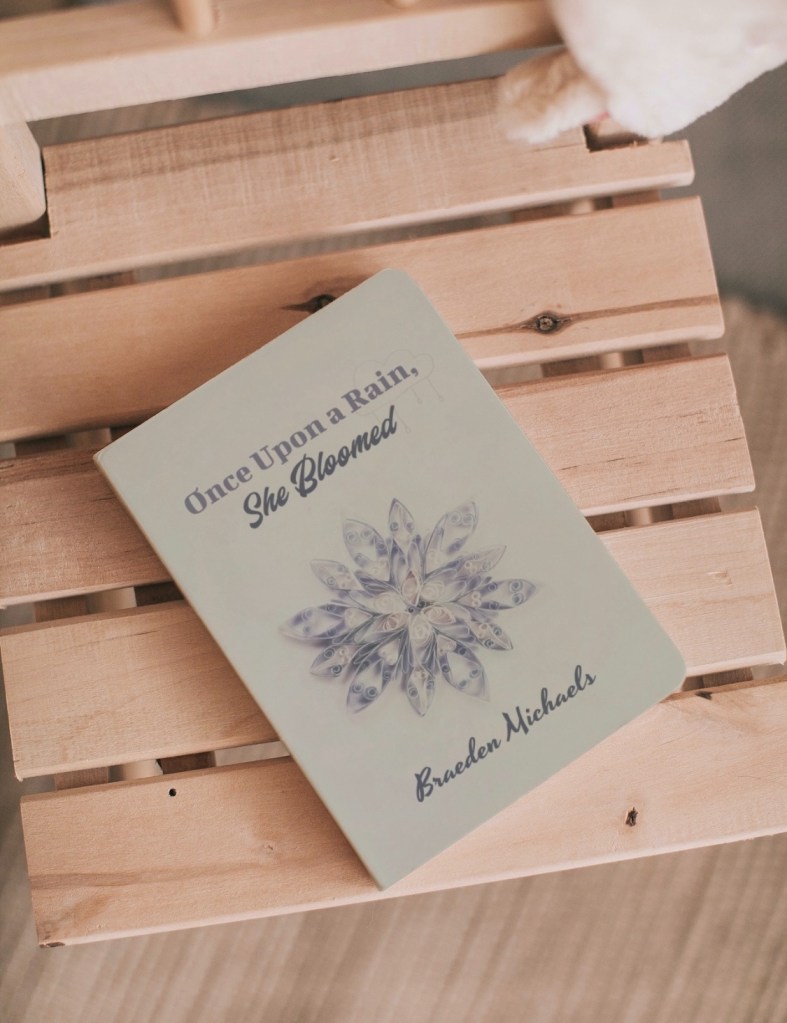
📚Once Upon A Rain, She Bloomed

Between shadows and memory, one woman’s diary elucidates relationships come and gone, those who helped shape who she is from the inside out. Turning the rain into something beautiful, the opening petals of a rose now blooming.

Veteran poet Braeden Michaels crafts his seventh collection of poetry into a mold of vision. Like pages from a twisted fairy tale, he narrates using his unique poetic style and perspective, first dissecting emotion before reconstructing and reimagining each one.


My books are available here .

Unapologetically Unashamed

I drown in my cravings, flames from your lips, and the desires from your tongue. I glare at my weaknesses with swollen tears. I hunger something that my emptiness won’t ever touch. I grip on to my fascinations and urges with insomniac eyes. I carry my loneliness on my sleeve and unapologetically unashamed for wanting your luscious skin.

The circle of my friendships get smaller, I make my myself distant the closer I get. I promise you, you will wish we never met. The hello’s will turn into goodbyes, I will make sure you can’t see the rain from my eyes. I will share more truths and you will want to run. Don’t be surprised of the person I will become.

I sink in my yearnings, scattered fantasies and the desolation inside. I dwell in my painted circles, faded memories and the opaque skies that leave me stranded in the bitterness. I am slightly disconnected, partially detached, and withdrawn from the cracks I wish not to see. I displace the stained hindrances and sanguine complaints within my state of consciousness.
I am unapologetically unashamed for longing for your sentimental touch.

The circle of my friendships get smaller, I tend to make others uncomfortable with the things I shouldn’t say. I promise you, I will belong in your past and know you won’t stay. I expect no response and the late replies. I will make sure you won’t see the pain in my fragile eyes. I will be more open and will tell you how I feel. In the end, we will find out who was real.


My books are available here .

Growth is powerful. Often times you can’t see how much you have grown until you look back at who you were or what you have decided to let go. I have been writing for decades and have kept it a secret. Why? The reasons why I write are endless. It’s therapeutic, mentally stimulating, challenging, a place where I can voice my opinions, and today I believe others can find others or themselves in my poetry.
It can be a place of self discovery and reflection.

Generally speaking, the perspective of a poet by society is someone who is broken, emotionally sensitive, and their voice is better articulated through words on paper than being spoken. To clarify this, written words are better used to express themselves emotionally. I can relate to this part. I am an emotional person and often times I cry because I have no words at times. Today I write with more of bigger purpose. I want to show the world that you people are not broken, they are just misunderstood. They are not surrounded by the right people.

At the end of my first marriage, I took it upon myself to attend therapy. I knew there were some things about me I needed to fix. I am a work in progress, in fact we all are a work in progress and under construction. Two of the things in my marriage that I needed to work on was speaking up for myself and taking control of certain aspects of my life. I was married to a woman who was overbearing, domineering and controlling. She was also an alcoholic. On my end, I wasn’t mature enough to walk away and sought out attention in the wrong way ways. I hid my writing at this time. Therapy gave me guidance and direction.

One of the things that I learned in therapy is that my growth was limited due to my surroundings. My father is quite judgmental and critical. Once I remarried and moved away, my confidence in myself flourished. I saw that I needed to move away. I will never tell my father that because I know that would hurt his feelings. I appreciate all that he is given me and the love that he knows how to give. He doesn’t just seem to care how to present sensitive topics, and how you present them often times is more important than what you say. As I get older, I’m trying to be aware of how I present subjects as well. There is a time to be straight forward, direct and there is a time to communicate with compassion.

In the end, I have grown to try to see the world and life through others eyes. I am not dead set on being right and if I am wrong, I will own up to it. I write poetry from the clouds with eagle eyes and try to embrace humanity. I see humanity without labels. There is a long list of individuals who want the world to change and I stand in a small line where I want to change the world. Everything is perspective and perspective is everything.


My books are available here .

Lukewarm Coffee

I found the most reckless line in your diary. “I know you can’t remember, all I can feel are the tears of September.” l was mesmerized by the details of the most piercing moments until I realized I was the subject. I was perplexed and the inner light began to fade. I found a line that shredded my heart into pieces.”You are the avalanche I could not see, you won’t be awake when I leave.” I glanced through the suffering and the realization is settling that you see me as a self absorbed monster.

You drank lukewarm coffee with a ballad crying in your head, rearranging the lyrics, forgetting all the things I said. You replaced conversation with an awkward silence and grand expectations. Perhaps you and I sat on quicksand, never making a solid foundation. You wanted me to crawl inside your mind, sit indian style, and look for your missing smile. You never mentioned, you craved endless attention and you didn’t get what you deserved. If I didn’t love you, can you tell me why I’m so hurt.

I found your latest entry in your book of fiction. “I know you forgot about my horrendous childhood, feeling lost and misunderstood.” I was fascinated with your chilling imagination with minutia painted with your fingertips. I was bewildered and the answers began to become in focus. I found a line that cracked the outer shell of my soul. “You are the villain in this horrific tale, because of you I have failed.” I am done tasting this bitter and water down concoction.

You drank lukewarm coffee with complaints, criticism, and tirades surrounding your silent skeleton. You are the playwright, weeping dramatist, and the author of colorful exaggerations. You are the puzzle, desiring me to put you together, believing in the everlasting, wishing for forever. You are numb from the waist down, with your feet barely touching the ground. You blame me for that earth shattering tragedy. I will love you until the end of time despite the fact you are no longer in love with me.


My books are available here.

excerpt from “The Raven’s Poison”

Indecisions hide like bats in the echoes of the cave
Uncertainty sips from the acidic river
Vinegar seeping between the crushed bones and sharp nerves
Isolation and desolation are thumbs ripped from each hand
And the rattle lingers in the corner of the ear drum

Dismay is tucked away behind a faded curtain
Flaws stick to me like starving fleas
Substance is the saliva dripping from the piranha’s teeth
The equilibrium inside me wakes up the storm
And the rattle parades in a rhythm that disturbs the haze

Symptoms of a nontransparent disease spread
Inside the soliloquy the cage embraces the thunder
Murmurs and grumbles tremble with fright
Theology and myths walking in unison
And the rattle pounds like a headache

Butchered insults and splinters drive three inches through my anger
Crude laughs and vicious skies open up
pouring sadness
Exasperation drags my eyelids through the dirt
Sorrow is a creek that I cleanse the silence
And the rattle pierces my aching skin

And I lay here with the rattle in the cage soothing the emptiness


My books are available on Amazon.