I am not lost in the way people mean it, not wandering without direction or purpose, not broken by the absence of a map. I am simply unseen, standing in the quiet spaces where footsteps soften and names are spoken less often. There is a difference between being lost and being overlooked, between drifting and choosing to walk a road few recognize as real.
I move through days carrying questions instead of answers, and I have learned that questions weigh more. They bend the spine, slow the stride, demand pauses at intersections where certainty would have passed through without noticing. I linger there, not because I am afraid to choose, but because I understand that some paths reveal themselves only after patience has been practiced.
The world favors arrival. It celebrates destinations, milestones, the clean lines of progress drawn in ink bold enough for everyone to see. But there is no applause for becoming, for the silent labor of shaping a self in private. I am in that labor now, hands dusty, heart unfinished, building something that does not yet resemble the final structure. This work is invisible, and so am I.
There are days when the silence feels like erasure, when I wonder if existence requires witnesses to be real. I speak my name softly to remind myself that I am still here, that breath is proof enough. I remind myself that roots grow in darkness, that seeds do not announce themselves until they are ready to break the surface and claim the light.
I am not behind; I am beneath, learning the architecture of depth. While others race toward horizons, I am studying the ground, the fractures and the strength hidden inside what holds us upright. I am learning how much pressure it takes to become unmovable, how stillness can be a form of preparation rather than surrender.
Being unfound has taught me gentleness. It has taught me how to listen without interrupting, how to carry hope without demanding proof. It has taught me that worth is not measured by recognition, and that meaning does not need permission to exist. I am becoming fluent in the language of quiet persistence.
One day, perhaps, someone will look my way and think they have discovered me, as if I had been waiting in plain sight all along. They will not know the nights spent assembling courage, the mornings stitched together with resolve, the slow, deliberate faith it took to remain here without applause.
Until then, I walk on. Not lost. Not broken. Just moving through the in-between, trusting that being unfound is not failure, but a necessary season of becoming. I am not lost, just not found—and that, too, is a place worth standing.
Once upon a midnight fear She took a sip of corrosion Debilitating manners and quirks Fumbling through a frenzy Gliding inside hallucinations Staggering outside the commotions A recollection of mourning
Stern exchanges melting Comments and remarks growl Sentiments dressed in black Treasures whispering hush Ripping dead skin with caution Crumbling faith turns into dirt A recollection of mourning
Hunger flexing with animosity Greed panting with saliva In holy matrimony with the raven She tasted the hollow bitterness Numb and disgusted by the poison Infuriated with the toxic rants A recollection of mourning
Provoked by exasperation Anxiety wrapped around her neck Choking on sour corruption Addicted to the murmurs Inhaling the virulent winds Wounded by a malicious tongue A recollection of mourning
A catastrophic touch bellowed Infatuation hung as a disaster Benevolence was a chewed up dog bone Loneliness exhaled rapidly Sympathy was a an old rag Love was just mucus from a cough A recollection of mourning
She dances like a ballerina in a snow globe dandelions are adding lyrics to the sound of Mozart the splashes of watercolors were hanging above her elegance She glides for forgiveness and sways for sobriety the tinsel around her fury spirit is no longer sparkling She is twirling and spinning for a numb audience the atmosphere is toxic the ambiance in the snow globe is desolate At the end of the ballet only one rose thrown in front of her feet God threw it with all her might Her tears fell to the floor like a tidal wave She only needed to dance for herself
The bar breathes like an old animal—slow, practiced, familiar with survival. Not alive in any holy sense, just functional. Lights dim enough to forgive faces. Music limps between songs. The floor remembers every spill better than the people who caused them. This place doesn’t ask why you came in. It already knows.
Maynard Wells sits three stools from the end. He learned long ago that the end is a confession and the middle is a lie. He chooses the space where no one expects anything from him. His glass is whiskey because whiskey doesn’t pretend to be anything else. He didn’t need it. That never stopped him before.
Mara works the bar like a priest without absolution. She slides napkins under glasses the way you might tuck dirt over a grave—neat, respectful, temporary. She doesn’t ask Maynard how he’s doing. That’s how he knows she sees him clearly.
To his left, a couple dismantles their life in whispers. The dangerous kind—the kind sharpened over weeks. They smile for the room, but their eyes don’t participate. The man worries the rim of his bottle like it might answer back. The woman studies her drink as if it owes her instructions. Maynard doesn’t know their names, but he knows the posture of people realizing love has become labor.
Across the room, laughter blooms too loud and too fast. A cluster of friends leaning into one another, pretending gravity hasn’t started its work yet. One of them—red jacket, restless hands—keeps checking his phone. Waiting. Everyone here is waiting. They just use different excuses.
Loneliness doesn’t announce itself. It sits down beside you like it’s always belonged there. Orders what you’re already drinking. Says nothing. Maynard respects that. Silence, at least, doesn’t argue.
He tells himself he came here to write. That’s the version he prefers. The truth is messier: he came to be seen without being known. There’s a notebook in his jacket, thick with intention, thin with follow-through. It weighs enough to feel like hope without demanding proof. Writers carry notebooks the way some people carry prayers—unspoken, unfinished, still believed in.
The man at the end of the bar breaks open mid-sentence, spilling a story about a job lost or abandoned. The details shift, but the injustice remains solid. He gestures at empty air, arguing with something that left him years ago. No one interrupts. That’s the rule here. You let people speak until they’re done bleeding.
Maynard wonders what would happen if he spoke. If the truth would come out as poetry or complaint. If it would sound brave or just tired. There’s comfort in staying quiet. Quiet doesn’t get corrected.
Memory shows up wearing a familiar face. Orders the drink she used to love just to see if it still hurts. It does. She believed places like this were confessionals. Said you could hear the truth in how people ordered—neat if they were hiding, on the rocks if they were stalling, cheap if they’d already surrendered. She laughed with her whole body. Leaned in when she talked. Made strangers feel chosen. Maynard loved her for that. Hated himself for needing it. They were good until they made a sport out of wounding each other.
A song everyone knows finds its way out of the jukebox. Heads nod. Someone hums. For a brief moment, the room aligns—strangers stitched together by a chorus that once meant something in another life. Bars are good at compressing time. You can be young and old and heartbroken all at once if the music hits right.
Maynard writes: The mask slips here, but no one notices because everyone is busy adjusting their own. He doesn’t fix it. Overwriting feels like fear.
The door opens. Cold air follows a man who looks like he’s already lost something tonight. He orders a double without looking. Scans the room for a reason to stay. Doesn’t find one. Sits anyway.
Hope is quieter than people expect. It doesn’t shine. It doesn’t ask. It sits in the corner pretending it’s fine either way. Hope has learned manners.
The couple beside him stops whispering. The silence is surgical. The woman delivers a sentence she’s been sharpening for weeks. Clean. Accurate. The man nods like gravity has finally won. They don’t touch. That’s how you know something is finished—or close enough to mourn.
Mara wipes the bar, listening without collecting. Maynard wonders how many versions of the same story she’s heard. People explaining their loneliness as if it needs justification. As if it isn’t just another weather pattern.
He drinks. The burn proves he’s still capable of feeling something sharp. The glass leaves a ring on the bar—evidence that will be erased without ceremony. There’s a lesson there. He ignores it.
The red jacket starts talking about meaning. About how everyone is just trying to be less alone. His friends nod like this speech has been rehearsed in a hundred bars. He means it, though. Meaning doesn’t require originality. Just sincerity.
Maynard writes again: Loneliness isn’t the absence of people. It’s the absence of recognition. That one stays.
A siren passes outside, distant but insistent. The world hasn’t stopped just because they needed a pause. Inside, last call looms. The room groans. No one is eager to return to what’s waiting beyond these walls.
The man at the end pays, tips heavy like an apology, and stumbles toward the door. For a moment, Maynard worries about him. Then he remembers: everyone makes it home somehow. Or they don’t. Worry doesn’t change the math.
He thinks about who he’ll be tomorrow. Which stories he’ll tell. Which ones he’ll bury. This night will shrink into something manageable—a glass, a song, a feeling he never quite named. He’ll describe the bar someday and leave out the important parts because they’re too quiet to explain.
Maynard closes the notebook. Some moments don’t want to be captured. They want to be endured. He pays, thanks Mara, means it. She nods, already turning toward the next confession.
When he stands, the room tilts—not from the drink, but from the weight of everything unsaid. Outside, the street is colder and more honest. Neon buzzes behind him like a dare. He pulls his jacket tight, the notebook warm against his chest, and walks on.
This kind of night doesn’t stay behind when you leave.
I want to die on my birthday, not because I hate living, but because I am tired of the arithmetic of it, the way years stack like unpaid bills, the way candles turn into tiny interrogations asking what I did with the light. On that day the calendar claps, people text confetti, and I feel like a guest of honor at my own inquest, smiling while the room waits for a speech I never practiced. Birthdays pretend to be doors; mostly they are mirrors, and I am sick of learning my face by surprise.
I want to die on my birthday the way a song wants to end on its own chord, not dragged into an encore by polite applause. I imagine the cake sweating sugar, the knife clean and ceremonial, the wishes folding themselves into paper boats that refuse to float. I imagine the room forgiving me for leaving early, the clock loosening its grip, the candles admitting they were tired too. This is not a plan, it is a metaphor I keep touching like a bruise to see if it still hurts.
Every year arrives with a receipt. It itemizes mistakes, discounts the miracles, charges interest on love. I have learned how to carry gifts with one arm and grief with the other, how to say thank you while inventorying exits. The party hats fit like borrowed confidence. Laughter behaves, obedient as a trained animal. Inside me, something feral circles the truth, asking whether survival is a habit or a choice.
If I could choose the ending, I would choose a quiet that knows my name. I would choose to lay down the weight of being seen, the exhausting labor of translation between who I am and who I perform. I would choose to stop proving endurance is a virtue. The body keeps score, they say; mine keeps ledgers, tallies nights slept in pieces, mornings stitched together with coffee and resolve.
Still, birthdays are stubborn. They keep showing up with balloons like minor gods, insisting on witness. Friends insist too, their hands warm, their eyes unsolved. Love is an interruption I never schedule but always answer. It knocks with groceries and bad jokes and the audacity to believe tomorrow is not a trap. Sometimes I let it in. Sometimes it stays.
So if I say I want to die on my birthday, hear the grammar beneath it. I want an ending that listens. I want the counting to stop hurting. I want to blow out the candles and not be afraid of the dark that follows. I want to live long enough to learn another language for staying, one where the date on the cake is not a verdict but a comma, and the sentence keeps breathing. Maybe the wish is simpler: to be held without a stopwatch, to be celebrated without being measured, to be allowed a softness that does not require proof. Maybe the wish is to keep arriving, quietly, without fireworks, learning how to stand in the year like weather, changing, survivable. If there is a gift, let it be this: another breath that does not owe anyone an explanation, wrapped, opened, kept.
I think I am done, not in the dramatic way doors slam or glasses shatter, but in the quiet way dust settles after everyone leaves the room and the echo finally gets tired of hearing itself. I say it while staring at a wall that has heard every promise I ever made and never once held me accountable for breaking them. The sentence feels unfinished, like a chair missing a leg, but I sit in it anyway and wait to fall.
I think I am done chasing versions of myself that only exist at 2 a.m., the ambitious ghost, the healed future, the man who knows exactly what to say and never says it too late. I am done apologizing to mirrors, done negotiating with mornings, done pretending exhaustion is a personality trait instead of a warning sign. Even my breath sounds relieved, like it has been carrying something heavy for miles.
I have tried to quit before. I quit love in lowercase letters, quit faith on weekdays, quit hope whenever it became inconvenient. I packed up my convictions in cardboard boxes labeled “maybe later” and stacked them in the corner of my chest. Sometimes I opened one just to make sure they were still breathing. They always were, stubborn as weeds.
I think I am done mistaking survival for success. Done clapping for myself just because I stayed standing. There is a difference between being alive and being present, and I have lived most of my life like a voicemail no one deletes. I keep replaying old messages, listening for a version of me that sounds convinced.
The world keeps asking what’s next, as if I owe it a sequel. As if stopping is a failure instead of a skill. I want to tell them I am not ending, I am pausing, like music between tracks when the silence is part of the art. I want to learn how to rest without guilt, how to be unfinished without feeling broken.
I think I am done bleeding for proof. Done turning pain into poetry just to make it respectable. Some wounds don’t want metaphors, they want time, and time has been knocking patiently while I kept writing excuses on the door.
If this is the end, it is a soft one. No fireworks, no funeral. Just a man setting down what he can no longer carry and realizing his hands still work, still open, still capable of holding something new. I think I am done, and for the first time, it doesn’t sound like giving up. It sounds like making room.
I’ve overdosed on goodbyes, heartache, and a darkness I can no longer recognize I’ve overdosed on indifference, immaturity, and over used cliches I can no longer reach But my effervescent soul craves something more I’ve overdosed on circling nightmares, memories of champagne, and meaningless kisses I can no longer feel I’ve overdosed on bottles of tears, catastrophic losses and unspoken conversations that I can no longer hear But my effervescent soul craves something more I’ve overdosed on empty spaces, dead ends, and simplified poetry that I can no longer read I’ve overdosed on shallow dialogue, winter lies and intoxicating fairytales that I can no longer consume But my effervescent soul craves something more
Once upon a scattered verse, I woke inside a sentence that refused to end. Ink dripped from the ceiling like old rain, letters crawling the walls, whispering my name as if they knew me better than the world ever had. The room was built of margins, left and right pressing inward, and every breath tasted like dusted books that had not been opened since their spines learned how to crack. I could not tell if I was young there, or old, or neither at all. Time doesn’t matter when no one is watching. I carried a pen like a dull blade, hoping if I pressed hard enough it might finally cut through silence. Outside the window, the moon hung crooked, a pale editor with nothing to say, and the stars looked like misplaced punctuation in a sentence no one bothered to finish.
I wrote because the quiet was too loud. I wrote because the walls leaned closer every time I tried to speak. I wrote about rivers swallowing names, about lovers who forgot the sound of their own laughter, about graves filled with unread prayers. I wrote until my fingers bruised purple, until the paper drank me dry, until my heart learned the steady rhythm of erasure. But no one came. There was no knock, no breath beneath the door. The world moved on with cleaner hands, scrolling past my life like an advertisement they could not skip fast enough. My words lay stacked in neat little coffins, titles etched like headstones, waiting for eyes that never arrived to pronounce them alive.
I imagined readers the way children imagine ghosts, half-hoping, half-afraid, convinced they were near. I pictured someone under a dim lamp at midnight, finding themselves inside my metaphors, feeling less alone because I had bled honestly. But imagination is a cruel lullaby. It tucks you in and leaves the window open for despair to climb inside. The nightmare deepened. Libraries turned their backs on me. Bookstores locked their doors with polished smiles. Even the wind refused to carry my lines, dropping them in gutters where rain smudged meaning into gray apology. I watched my poems age without witnesses, their voices cracking like neglected instruments left to rot in quiet rooms.
There is a special kind of decay reserved for unseen art. It does not scream; it wilts. It curls inward, questioning its own worth, asking if beauty exists at all without a gaze to confirm it. I felt that rot settle inside my chest, a slow mold growing over hope, soft and persistent, impossible to scrape away. I tried to write lighter things—sunrise, redemption, hands finding hands—but the words knew better than I did. They sagged, heavy with the truth that joy still wants to be witnessed. Even happiness grows lonely in a vacuum. Even miracles want applause, or at least a quiet nod from someone who understands.
So I returned to the dark. I described nights that chew on your spine, mirrors that refuse to reflect anything kind, dreams that end right before salvation. I became fluent in grief, conversational in despair, because sorrow, at least, kept me company. It sat beside me like a loyal stray, sharing its bones, never asking me to stop. I wrote my name again and again, afraid it would disappear if I didn’t. I tucked it between metaphors, hid it under enjambment, hoping someday someone would find it like a pressed flower in an old book and wonder who I had been. Legacy is a fragile thing when no one is listening.
The nightmare showed me the future. My notebooks boxed and labeled miscellaneous. My hard drive failing without ceremony. My words dissolving into obsolete formats. There was no obituary for the poems, no footnote acknowledging their effort. Just silence, vast and unmarked, stretching farther than language could reach. I screamed, but it came out as sentence. I begged, but it shaped itself into paragraph. Everything I felt turned into something beautiful, and that was the cruelest part of all. Beauty with no witness is still beauty, but it hurts like loving someone who will never learn your name.
At the center of the nightmare, I met myself as a child, holding a notebook too big for his hands. He looked up at me and asked if anyone heard us. I searched for an answer strong enough to survive the question and found none. So I lied. I told him yes, someday, because hope, even when false, is gentler than the truth. When I woke, the room was the same. Morning did not change anything. The world still spun without my voice, and my poems still waited, patient as graves. But I sat up anyway. I picked up the pen. Not because someone was watching, but because stopping would mean the nightmare had won.
I write for the unseen. For the maybe. For the never. For the chance that one day a stranger will stumble into my darkness and recognize it as their own. Until then, I haunt the page, a ghost made of ink and persistence, dreaming of eyes, dreaming of touch, dreaming—still—of being read.
Once upon a broken heat I learned that loneliness does not arrive loudly. It does not knock or announce itself with ceremony. It seeps in, quiet as dusk, and takes a seat beside you as if it has always belonged there. I remember thinking that friends would come naturally, like breathing, like weather, like something no one ever had to explain. I did not know then that connection was a language I would struggle to speak, that depth would be my native tongue while most people preferred simple phrases and quick exits.
I tried to make friends the way everyone else seemed to. I smiled at the right moments. I laughed when laughter was expected. I learned how to talk about nothing at all for long stretches of time, though every word felt like gravel in my mouth. I wanted to ask the questions that mattered. I wanted to talk about grief and meaning and the way memories can bruise you without warning. Instead, I learned that too much honesty empties rooms. People like the idea of depth until they feel the pressure of it pulling at their lungs.
Some friendships began brightly, full of promise, like candles lit in dark rooms. We shared music, secrets, fragments of ourselves we did not show the rest of the world. I believed that meant permanence. I believed that once someone saw you clearly, they would not leave. I was wrong more times than I can count. People drifted. People changed. People decided my sadness was too heavy to carry, my silence too loud to ignore. They left without cruelty most of the time, which somehow hurt more. There is nothing to fight against when someone simply fades.
I mourned those friendships in private. There are no rituals for the loss of the living. No headstones for people who stop calling. No ceremonies for being replaced quietly. I replayed conversations late at night, searching for the moment where I became too much or not enough. I wondered if depth was a flaw, if craving meaning was something that needed to be cured. I tried to make myself smaller. I tried to speak less, feel less, need less. It never worked for long.
Then came the deaths. Real ones. The kind that do not return your messages because they can no longer hear them. Names that once filled rooms reduced to photographs and past tense. I watched people I loved disappear into the earth and into memory, and something in me hardened and hollowed at the same time. Grief rearranged the furniture of my mind. Every loss taught me how temporary everything is, how fragile every connection becomes once you understand it can vanish without warning.
After the funerals, the world expected me to continue as if something fundamental had not been removed. Conversations returned to normal. Laughter resumed. But I carried ghosts with me everywhere. I heard the dead in quiet moments, felt them in the spaces between sentences. Their absence became another companion, one that never asked me to explain myself.
It was then that the blank page became my closest friend. It waited for me every night, unmarked and unafraid. It did not judge the darkness of my thoughts or ask me to soften them. I could tell it everything. I could confess the resentment, the envy, the exhaustion of trying to belong. The page absorbed my words and held them without recoil. Ink became proof that I existed, that my inner world had weight and shape.
I began to understand that writing was not a hobby but a form of survival. When people left, the page stayed. When voices went silent forever, the page listened. I poured my losses into sentences and watched them transform into something almost bearable. Metaphor became a bridge between my pain and the possibility of being understood. Symbolism allowed me to say what I could never speak aloud.
I crave depth because shallow water has never taught me how to swim. I crave conversations that leave marks, that change you slightly after they end. I want connection that acknowledges suffering instead of avoiding it. I want friendships that understand silence as language, grief as history, and sadness as evidence of having loved deeply. This craving has cost me people. It has also saved me from living half awake.
The solitude did not leave, but it changed. It became quieter, less cruel. I learned to sit with it, to let it speak. In the absence of others, I became a witness to myself. I documented my own survival in paragraphs and fragments. I learned that being alone does not always mean being empty. Sometimes it means being full of things no one has asked you to share yet.
I still lose people. I still grieve. The blank page is still my truest companion. But within this solitude, I have found a strange, aching honesty. I write to remember the dead, to honor the friendships that could not stay, to speak the truths that make others uncomfortable. I write because depth demands expression, and silence would kill me faster than loneliness ever could.
Once upon a midnight fear, you will not see the echoes of my tears, because they learned to walk softly, barefoot through the house of my chest, passing clocks that cough and calendars that bruise. This is how the story begins: the way sleep explains itself to the sea, with a hush mistaken for mercy. There was a town once, built entirely of punctuation, comma streets and ellipsis alleys, where laughter leaned like tired lampposts and rumors kept bees. I lived there briefly, renting a window, watching the moon practice apologies in the tin mirrors of rooftops. Satire was the local weather, a persistent drizzle that made even statues blink and reconsider themselves.
One evening the ground cleared its throat. Dogs began writing letters to the dark. Teacups clinked like nervous teeth. The earth—an old poet with arthritis—shifted a word and cracked the sentence. We called it an earthquake, because we are afraid of naming confessions honestly. I was carrying a pocket of stars then, contraband hope wrapped in a receipt, when the tremor bowed politely, like a waiter, and asked my name. I gave it a nickname instead, because truth grows shy in public, and the nickname tasted of copper and rain.
Stories fell from shelves, their spines sighing as they hit the floor. A map unlearned its borders. My shadow slipped on a metaphor and laughed, which felt briefly illegal. In the dust I found a childhood still warm, still breathing, counting marbles like prayers. Satirical saints wagged their halos and said this was character development, selling postcards of ruin with inspirational fonts, while a sparrow stitched the air, threading silence through rubble until the silence held.
I followed a crack in the street the way one follows a river that already knows your future. It led to a theater with no roof, where clouds rehearsed tragedies and understudies called thunder. The stage manager was a patient ant keeping notes with crumbs. There, a woman named Gravity sang lullabies in a minor key, braiding ankles to floors and memories to doors. She sang of falling as pilgrimage, of bruises as stamps in a passport, and I stamped willingly. Dreams queued politely nearby, holding numbers, waiting to explain themselves. One wore my father’s coat and smelled of winter and oranges, and told me to forgive the ground for wanting to move on.
The quake softened, a loosening hand. Buildings exhaled. A piano found its missing leg and forgave the floor. We swept metaphors into piles labeled Later, Maybe, Never, and pretended this was normal. At dawn the sky brought coffee; steam rose like a forgiven rumor. I wrote apologies to the cracks and they wrote back, unsigned, saying they only wanted to be heard. I pressed my ear to the street and listened to the earth practice empathy.
I left town with a suitcase of aftershocks, each one a small bell. On the road, satire waved from ditches holding signs that promised detours to meaning. I laughed, then slowed, then listened. Time limped afterward, hands bandaged with patience, agreeing to walk slower for the wounded. Neighbors traded sugar for stories and salt for names we forgot to say. Mirrors learned manners, tilting their faces to flatter survival. A philosopher in the square juggled apples and dropped questions on purpose, saying certainty bruises easily and doubt is a feather mattress. Children chalked hopscotch across fault lines, jumping from Before to After, their laughter forming a bridge no engineer approved.
Bread rose despite instructions. Yeast preached resurrection to ovens. We ate metaphors warm, buttered with relief, crumbs mapping constellations on our shirts. Someone toasted absence and clinked a glass, and the glass forgave gravity again. I mailed a letter to the future without an address, only a mood. The stamp was a leaf. The postmark read, Whenever you’re ready. The future replied with a dream wrapped in newspaper, smelling of ink, the headline screaming that I survived myself.
Night rehearsed gently then, a lullaby with commas for stars. The moon stopped apologizing and listened. I slept with my shoes by the bed, in case the earth asked me to dance. Now the town is quieter. Punctuation has grown gardens. Ellipses bloom like pauses. Cracks are filled with gold because we learned a trick from old bowls: breakage can be an instruction manual. I keep the bells from my suitcase and ring them when words grow stubborn. They remind me that movement is a language, that fear read slowly is only a letter begging for context. So I write softly, and the ground answers softer still, and if the page trembles I breathe ink, count heartbeats, trust margins and footsteps, trusting that even endings are temporary shelters humming quietly while we learn balance beneath forgiving skies.
The poet’s tears do not rush. They gather slowly, like words circling a thought they are afraid to land on. They rise from the chest, where memory keeps its quiet archives, and they taste of all the moments that were almost spoken but never survived the air. Each tear carries a small history, a sentence unfinished, a love that learned to live in silence.
When they fall, they are not asking for mercy. They are translating feeling into something the body can release. Salt becomes language. The face becomes a page. The tear traces a line the poet could not yet write, slipping past grammar, past reason, past pride. It is a confession without audience, a prayer whispered to no one in particular.
Some tears are born from wonder—how beauty persists even after being wounded, how light still finds broken places and calls them holy. Others come heavy with grief, thick with nights that stretched too long and mornings that arrived empty-handed. These tears do not shout; they endure. They know the shape of loss and the patience of waiting.
The poet wipes their face and pretends the moment has passed, but it never does. The tears dry and move inward, settling between metaphors, breathing beneath the pauses, softening the sharp edges of truth. They become the weight behind every line, the ache that makes language honest.
For the poet’s tears are not an ending. They are the origin. They are the quiet proof that something mattered enough to break open, that the heart dared to feel deeply in a world that teaches restraint. And long after the eyes are dry, the tears remain—alive in the prose, asking the reader to feel them too.
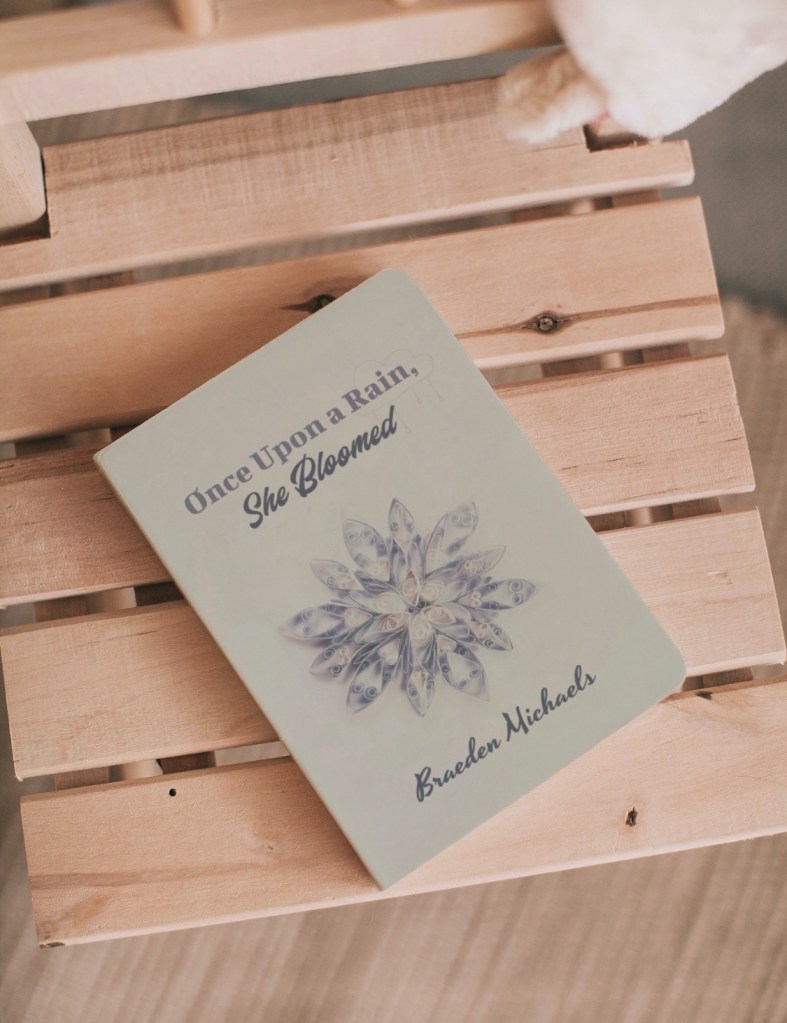
Between shadows and memory, one woman’s diary elucidates relationships come and gone, those who helped shape who she is from the inside out. Turning the rain into something beautiful, the opening petals of a rose now blooming.
Veteran poet Braeden Michaels crafts his seventh collection of poetry into a mold of vision. Like pages from a twisted fairy tale, he narrates using his unique poetic style and perspective, first dissecting emotion before reconstructing and reimagining each one.
I drown in my cravings, flames from your lips, and the desires from your tongue. I glare at my weaknesses with swollen tears. I hunger something that my emptiness won’t ever touch. I grip on to my fascinations and urges with insomniac eyes. I carry my loneliness on my sleeve and unapologetically unashamed for wanting your luscious skin.
The circle of my friendships get smaller, I make my myself distant the closer I get. I promise you, you will wish we never met. The hello’s will turn into goodbyes, I will make sure you can’t see the rain from my eyes. I will share more truths and you will want to run. Don’t be surprised of the person I will become.
I sink in my yearnings, scattered fantasies and the desolation inside. I dwell in my painted circles, faded memories and the opaque skies that leave me stranded in the bitterness. I am slightly disconnected, partially detached, and withdrawn from the cracks I wish not to see. I displace the stained hindrances and sanguine complaints within my state of consciousness. I am unapologetically unashamed for longing for your sentimental touch.
The circle of my friendships get smaller, I tend to make others uncomfortable with the things I shouldn’t say. I promise you, I will belong in your past and know you won’t stay. I expect no response and the late replies. I will make sure you won’t see the pain in my fragile eyes. I will be more open and will tell you how I feel. In the end, we will find out who was real.
I lay here in unloved skin with a ghost surrounding my unwritten pages I lay here in a whirlwind aching for you to fulfill my desolation with worn out tears I lay here with shadows crying and spelling your name with my fingertips I lay here in a cloud of passion missing your serenity wrapped around with my flames
Cover me in a blistering love Cover me in tender confetti Cover me in a bold yearning
“Come a little closer and don’t be afraid to feel, let’s get lost with what we know is real, Come a little closer and give me your recklessness, Come a little closer and fulfill my emptiness”
I lay here in unloved skin with an unhinged appetite boiling within I lay here in a frenzy circling for you to entertain myflammable wishes I lay here with fantasies exploding in luscious air I lay here in obscurity of devotion sweltering on the inside
Cover me in a sky of hope Cover me in tears of respect Cover me in a weeping bliss
“Come a little closer and breathe in our scent, come a little closer and feel where our dreams went, come a little closer give me what I long for, come a little closer and see you are all that I adore”
I was born with a second hand smile from the sunset. I walk with a tiny wheel in my pocket that won’t roll and converse with a novocaine tongue. I have a brother that uses me as a punchline in off color jokes and a sister with suspicion waltzing in her eyes. I have a mother who was buried at the Brookside cemetery under a choked up moon. I count my blessings rather than my drops of misery. Every now and then she looks at me says “It’s been a while since I’ve seen your second hand smile.”
I’ve tried to turn off the waterfall and dive into the river of flames. I’ve tired to stare into my silent villains and face my inward wars. I’ve tried to run from the screams but I am still in this seared skin. It feels like I’m never going to win.
I was born with a tattoo of a tear on my left cheek. I fumble through the streets with my blood not moving a centimeter. I have a snapshot of my apprehension and a voice that no know wants to hear. I have a mother that appreciated the words I tucked away from the heartless universe. Every now and then she looks at me says “It’s been a while since I’ve seen your second hand smile.”
I’ve tried to shrug off the heartache and walk away from senseless battles. I’ve tried to keep my swollen chin up and to listen to the fireflies in the pitch black. I can keep running in this burnt skin. It feels like I’m never going to win.
I was born with doubt flickering like a light on the inside. I stumble throughout the darkness gripping on to the glow. I have fluttering secrets and camouflaged my excuses to try to erase away the damage. I have a mother who wore a grin throughout her scowling hours. She defied being defeated nor broken down. Every now and then she looks at me says “It’s been a while since I’ve seen your second hand smile.”
I’ve tried to lose my biographical sighs and replace my intuition with logic. I’ve tried to step into my perspective and turn my head to see another view. But all I can feel is you. I have no where to begin. I’ve learned to accept that I just won’t win.
I photographed the cruelty spoken from your lips I no longer needed your warmth I photographed the lies that reverberated in your façade I no longer needed your touch I photographed the memories that had cracks with less meaning I no longer needed your approval I begin to dream wide and fell in love with the colors of my passions I photographed the emptiness and your signature dipped in carelessness I no longer needed your comfort I photographed the deceit and the war in your stubborn eyes I no longer needed your backbone I photographed the distance you created from the lack of affection I no longer needed your devotion I begin to see my strengths and embraced my weaknesses And you faded into the tears of the wind
I’ve kissed your mysteries with amplified eyes I’ve kissed your dead secrets with bloodshot lipstick “And now the love story takes a curve, seeing I won’t be the last and was never the first” I’ve kissed your metaphors with agony in my throat I’ve kissed your afternoons with scalding black coffee brewing “And the now the love story cuts me deep, I’m not myself and see you in my sleep” I’ve kissed your tragedies with a sea of glitter covering up your sins I’ve kissed your lying mouth with my ignorance sealed “And now the love story is coming to an end, now my life can truly begin” I’ve kissed your piano concerto with whispers fluttering in my ears I’ve kissed your villain with accusations stripped and shredded “And now the love story fades into my past, no longer do my tears have your autograph”
Forget me not, my sweet fears I found untouchable verses within my discomfort I found veracity within the crevices of the dark I found my reflection staring into my tattoo of courage I found emptiness deeper than this bottle
And my tears dry up and it’s time to stand up And my anxiety carries a heart beat And my passion bleeds forever more And my endless ink soars like a blackbird
“Take my hand, I can no longer do this alone. I can admit, I can no longer do this on my own”
Forget me not, my sweet fears I found my imagination spinning out of control I found my recklessness ripping me at the seams I found my identity buried in a grave with a bouquet of havoc on top I found my revelations reading scripture
And my tears dry up and it’s time to stand up And my anxiety carries a heart beat And my passion bleeds forever more And my endless ink soars like a blackbird
“Take my hand, I can no longer keep hurting myself, I can admit, something inside needs some help”
I’ve been walking through an electric calm with a crucifix woven into my chest. I can barely breathe but can feel tranquility gripping to my veins. I can exhale all my errors while my shadows can caress my fears. I’m gasping for my curse to vanish. I’m suffering with a small taste of compassion.
I can hear the angels crooning in my equilibrium. “I’m done am crawling, falling, and stalling because I’m ready to run. I have a light that’s more brilliant than the sun. I am done trying, dying, and crying from the destruction of my past. I am a born again miracle, white glaring spherical, with clarity sparkling in my photographs.”
I’ve been stumbling through an electric calm with vibrations whispering on my tongue. I can barely speak but feel drops of grief sliding down my throat. I can inhale all the suffering while my spine carries my turmoil. I’m letting go of the affliction. I’m dreaming for you to forgive me.
I can hear the monsters growling in my blizzard of indecisions. “I’m digging you a grave, your hesitancy and damnation will become your slaves. I’m the chain on your lilac bones, watching your heart turn into stone. I will watch you choke and convulse with a grin, I will be your unblemished sin. You will continue to swallow your glass of emptiness and feel reckless.”
That’s the way the addiction grumbles That’s the way the drunk stumbles That’s the way the moon serenades That’s the way the elephants walk in the parade That’s the way the politicians talk That’s the way the predators gawk
That’s the way the innocent dream That’s the way the raped scream That’s the way the fears surrender That’s the way the cold remembers That’s the way the lost are found That’s the way the veterans weep to the sounds
That’s the way the truth should be told That’s the way the lies are bitten and sold That’s the way the victim cries That’s the way the quiet feel inside That’s the way the impregnator stares That’s the way the son of a bitch cares
That’s the way the glass is poured That’s the way the children are ignored That’s the way the perception is skewed That’s the way the label is crude That’s the way the society thinks That’s the way the one percent drink
That’s the way the air becomes stale That’s the way the skin becomes pale That’s the way the poets write That’s the way the day turns into night That’s the way the heart breaks into bits That’s the way the last puzzle piece fits
That’s the way the thunder growls That’s the way the thieves prowl That’s the way the light disappear That’s the way the dark becomes crystal clear That’s the way the luck falls That’s the way the anger crawls
That’s the way the perpetrators finger points That’s the way the hippies smoke a joint That’s the way the teacher dresses That’s the way the students make messes That’s the way the winners gloat That’s the way the captain steers the boats
That’s the way the rich treat the poor That’s the way the small companies closes its doors That’s the way the snake rattles That’s the way the beast fights in battle That’s the way the cookie crumbles That’s the way the insider fumbles
That’s the way the performers act That’s the way the sky becomes black That’s the way the song is heard That’s the way the villains see the words That’s the way the view turns into stone That’s the way the virtuous become alone
That’s the way the branch breaks That’s the way the dealers make mistakes That’s the way the world divides That’s the way the humans collide That’s the way the people see That’s the way the universe will be






 Storm of Ink