Storm Fragments

At 3:45 AM, the house was silent except for the tired hum of the refrigerator and the restless ticking of a clock I had never noticed before. Funny how certain sounds only reveal themselves when your illusions finally die. The darkness sat beside me like an old friend, patient and knowing, while I stared at the ceiling and replayed every conversation, every touch, every promise that once felt sacred.

I used to think love was hidden in the little things. The way you smiled when I walked through the door. The way your fingers found mine without thinking. The way your voice softened when you spoke my name. I built entire cathedrals out of those moments. I carved meaning into ordinary gestures and called it devotion. I turned crumbs into feasts and shadows into sunlight because I wanted so desperately to believe.

But at 3:45 AM, truth arrived without knocking. Truth is cruel that way. It does not storm through the front door. It slips through cracks in your heart. It waits until the excuses grow tired and the lies lose their disguises. Then it settles into the room beside you and asks a question you have spent months avoiding: what if she never loved you the way you loved her?

The question sat in my chest like a stone. I thought about the countless hours spent working late, convincing myself that sacrifice was proof of commitment. I remembered every exhausted morning, every missed opportunity, every dream postponed because I wanted to build a future sturdy enough for two people. I carried the weight gladly because I thought we were carrying it together. Now, in the dim blue glow of the clock, I realized I had been carrying both of us alone.

Suddenly, memories began changing shape. Moments I once painted gold revealed the rust beneath them. The excitement in your voice was brightest when money entered the conversation. Your affection seemed strongest after bonuses, promotions, overtime shifts. The arguments rarely centered on love, respect, or understanding. They circled finances like vultures circling a wounded animal. I hated myself for noticing, because once you see something, you cannot unsee it.
The realization felt like standing in a museum and discovering every masterpiece was a forgery. The colors remained beautiful. The frames remained elegant. But the authenticity was gone, and without authenticity, beauty becomes decoration. Maybe that is what I had become—decoration. A provider. A paycheck wearing a heartbeat.

The thought hollowed me out. Outside, the moon hung low above the sleeping neighborhood, pale and distant. Streetlights cast long amber shadows across the pavement, and for a moment I imagined my life from above. Years of effort. Years of loyalty. Years of believing that love was something earned through consistency and sacrifice. Maybe that was my mistake. Love should never have to be purchased, not with money, not with exhaustion, not with pieces of yourself surrendered one at a time until there is nothing left but obligation.

I realized I could list every bill I paid, every burden I carried, every problem I solved. Yet I struggled to remember the last time I felt truly seen. Not appreciated for what I provided. Not admired for what I accomplished. Seen. The difference suddenly felt enormous. A wallet is useful. A person is loved.
At 3:45 AM, I understood that I had confused usefulness with affection. And that realization hurt more than anger ever could. Anger is hot. It burns quickly. It gives you something to fight. This was different. This was winter. A cold settling over memories that once kept me warm.

All the moments I silenced my own instincts because admitting the truth felt unbearable. Hope is a stubborn thing. It keeps watering dead flowers long after the garden has surrendered. I had been tending a garden of ghosts. Yet somewhere beneath the grief, another feeling emerged: relief. Small at first. Barely noticeable. Like the first gray hint of dawn beyond a black horizon. Because truth, no matter how painful, is lighter than pretending.

For the first time in a long time, I stopped negotiating with reality. I stopped rewriting the story to protect my heart. I stopped searching for evidence that contradicted what I already knew. Maybe you loved what I gave. Maybe you loved what I could provide. Maybe you loved the comfort, the security, the stability. But love should reach for the soul before it reaches for the wallet, and if it doesn’t, then it isn’t love I was mourning—it was an illusion.

At 3:45 AM, I finally buried it. The clock continued ticking. The refrigerator continued humming. The world continued turning. Yet something inside me had changed forever.

The pain remained, but it no longer felt like a prison. It felt like a doorway. Beyond it waited uncertainty, loneliness, and healing. Beyond it waited mornings where I no longer had to earn affection through sacrifice. Beyond it waited the possibility of being valued not for what I could give, but for who I was.
And as the first traces of dawn began softening the darkness outside my window, I realized something surprising. The saddest part was not discovering that she may have loved the paycheck more than the person. The saddest part was how long I believed that was all I deserved. The most beautiful part was finally understanding that it wasn’t.

Storm Fragments

I call myself black, not as a surrender, but as a language I learned before I had the words to explain anything else. It is the color I reach for when everything feels too loud, too exposed, too eager to be understood. Black is where I hide my edges, where I fold my contradictions into something that looks simple from the outside. It is not emptiness to me. It is containment. It is the quiet decision to hold everything in rather than spill it where it might be misunderstood.

You laugh at my sickness and whisper “Fuck You” with a grin in my ear. Am I supposed to be rattled?

I have worn it in different forms. Sometimes as silence. Sometimes as restraint. Sometimes as the way I walk into a room and refuse to be rearranged by it. Black is not sadness in my story—it is structure. It is the frame around everything I have survived without naming each fracture out loud. It is what remains when I stop performing brightness for the comfort of others.

You stare into my predator like eyes and feel a closeness with your “Fuck You” tone.

But even in that certainty, there is a pull I do not always admit.

Because I do not only want to be what I am. I want, in the hidden corners of thought, to be the color you despise the most. Not because I crave your rejection, but because I want to matter enough to provoke something real. Indifference feels like erasure. But dislike, even resistance, means I have entered your emotional world in a way that cannot be ignored.

There is a strange honesty in being despised. It means you have been seen without softness, without polishing, without the convenient filters people use to make each other easier to tolerate. I do not romanticize that feeling, but I understand its weight. To be disliked is still to be acknowledged. To be remembered. To leave a mark that does not fade politely into the background.

I imagine sometimes being that color in your mind—the one you associate with a feeling you cannot quite settle. Not light enough to forgive easily. Not soft enough to dismiss. A shade that lingers after the moment is over, sitting quietly in the edges of your thoughts when you are alone and honest.

Come on say it again – “Fuck You!” I dare you.

And yet, even that desire is not really about hatred. It is about presence. About refusing to be temporary in someone’s emotional landscape. I do not want to be something you pass through without noticing. I want to be something you cannot fully unsee, even when you try.

Black remains my foundation. My beginning and my return. But beneath it, or maybe beside it, there is this quieter contradiction: the wish to be transformed in your perception, to become a color that carries weight in your memory, even if that weight is uncomfortable.

Because being forgotten feels like the only true disappearance.

And I would rather be a color you struggle with than a silence you never had to acknowledge at all.

Storm Fragments

They speak to me as if I am less than human, as if my silence is permission and my patience is weakness. Every insult lands like ash on my skin. Every curse digs a little deeper, settling beneath the surface where bruises cannot be seen. I stand there, carrying words that were never meant to heal, only to wound.


Some days I replay the threats in the dark. The venom in a voice. The promise of harm disguised as power. “I will make you a widow.” “I will drown you.” Sentences that linger long after they are spoken, circling the room like hungry crows. They stain the air. They turn ordinary moments into shadows. They teach the heart to expect storms even beneath clear skies.


And still, I remain. Not untouched, not unbroken, but standing. A house battered by years of weather. A forest scarred by fire. The darkness has learned my name, yet it has not claimed me. The cruelty they offered became a river, and though it tried to pull me under, I learned how to breathe beneath black water and return to the surface carrying every wound like proof that I survived.

Storm Fragments

Apathy is an itch beneath the skin, a constant irritation no amount of scratching can soothe. It lingers in the quiet corners of conversations, in the hollow spaces between headlines and tragedies, in the tired shrug that follows another broken promise. Very few listen. Most only hear. Words pass through them like wind through dead branches, making noise but leaving nothing changed.

The itch grows. It crawls through crowded rooms and glowing screens, through prayers, protests, and desperate confessions. People nod, people agree, people move on. The world becomes a chorus of echoes, everyone speaking, almost no one listening.

And still the itch remains, demanding attention, demanding feeling. It is the discomfort of knowing something is wrong and watching indifference dress itself as wisdom. It is the ache of caring in a world that has learned how not to. It is the scratch that draws blood, the wound that refuses to close, the reminder that silence can be louder than any scream.

I move through my days like they’ve already happened, like I am remembering instead of living, untouched by urgency, untouched by fear. Time passes without asking anything of me, and I give it nothing back. The idea of an ending doesn’t disturb me; it just sits there, distant and weightless, like a horizon I don’t feel compelled to reach or avoid.

There is a quiet in not caring, a stillness that settles deeper than sadness ever could. No fight, no resistance, just a soft acceptance that everything fades whether I hold on or not. And no one will ever know if my poetry is me or something I invented to feel less invisible, whether these words are truth or just a shape I hide behind. If my name disappears, if my breath one day simply doesn’t return, it feels no more significant than any other moment slipping by unnoticed. I exist, and then I won’t, and somewhere in that truth is a calm I cannot quite explain.

You picked me up like something small and shining, turning me over in your hands as if I existed just to be noticed. You pressed your fingerprints into me, and I learned your touch like a language—how you brought me to life, how I only seemed to matter when you were looking.

I didn’t question it. I didn’t mind being the thing you reached for when the silence got too loud. You wound me up with your attention, and I gave you everything I was without asking what would happen when you stopped.

And you did stop.

No warning, no slow fading—just absence. The hands that once held me like I was something special simply forgot I was ever there.

Now I sit where you left me, not broken, just untouched. Still holding all the life you started in me, with nowhere for it to go, remembering what it felt like to be wanted… and how easily you decided I wasn’t anymore.

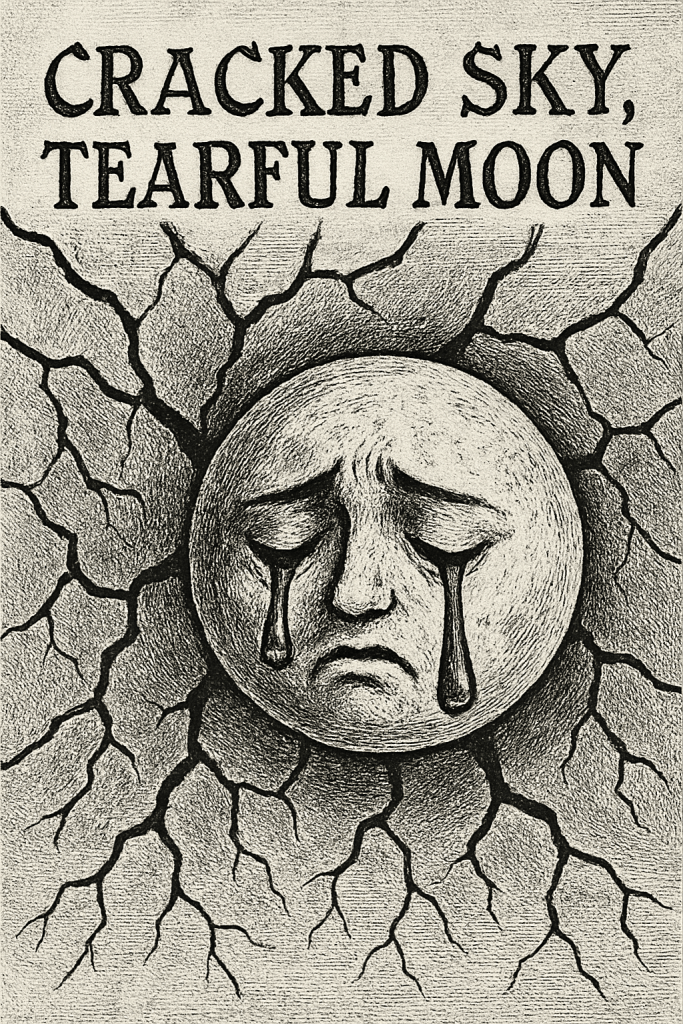
Cracked Sky, Tearful Moon

In this cracked sky
I am meant to burn in your stars
fall in your arms with my eyes shut
whisper my dreams in your ear
reach for your pitch black secrets
and feel the magic from your tearful moon

In this cracked sky
I am meant to entwine to your untamed scars
breathe in your heart pounding shadows
serenade my breathtaking desires
reach for your defenseless clouds
and feel the silhouette of your tearful moon

“Your love is awakening, my vulnerability isn’t shaking, and our love has a spectacular view, I had no idea I would fall in love with all the parts of you”

In this cracked sky
I am meant to graze your rattling fears
carve out the magnetism from your eyes
mutter my fantasies within the moans
reach for your tragedies with my tongue
and feel the agony of your tearful moon

In this cracked sky
I am meant to melt from your invincible wind
breathe out my uncontrollable love
grip on to your bellowing fascination
reach for your deepest and venomous sin
and feel the drops of mourning of your tearful moon

“Your love is absolutely real, where my senses are heightened and I can truly feel, I love what we have become, the tears of the moon disappear as we fall deep in love under a smothering sun”


My books are available here .

excerpt from “The Raven’s Poison”


Once upon a midnight fear
She took a sip of corrosion
Debilitating manners and quirks
Fumbling through a frenzy
Gliding inside hallucinations
Staggering outside the commotions
A recollection of mourning


Stern exchanges melting
Comments and remarks growl
Sentiments dressed in black
Treasures whispering hush
Ripping dead skin with caution
Crumbling faith turns into dirt
A recollection of mourning


Hunger flexing with animosity
Greed panting with saliva
In holy matrimony with the raven
She tasted the hollow bitterness
Numb and disgusted by the poison
Infuriated with the toxic rants
A recollection of mourning


Provoked by exasperation
Anxiety wrapped around her neck
Choking on sour corruption
Addicted to the murmurs
Inhaling the virulent winds
Wounded by a malicious tongue
A recollection of mourning


A catastrophic touch bellowed
Infatuation hung as a disaster
Benevolence was a chewed up dog bone
Loneliness exhaled rapidly
Sympathy was a an old rag
Love was just mucus from a cough
A recollection of mourning


My books are available here .

excerpt from “The Raven’s Poison”

She dances like a ballerina
in a snow globe
dandelions are adding
lyrics to the sound of Mozart
the splashes of watercolors
were hanging above her elegance
She glides for forgiveness
and sways for sobriety
the tinsel around her fury spirit
is no longer sparkling
She is twirling and spinning for
a numb audience
the atmosphere is toxic
the ambiance in the snow
globe is desolate
At the end of the ballet only
one rose thrown in front of her feet
God threw it with all her might
Her tears fell to the floor like a tidal wave
She only needed to dance for herself


My books are available here .

The bar breathes like an old animal—slow, practiced, familiar with survival. Not alive in any holy sense, just functional. Lights dim enough to forgive faces. Music limps between songs. The floor remembers every spill better than the people who caused them. This place doesn’t ask why you came in. It already knows.

Maynard Wells sits three stools from the end. He learned long ago that the end is a confession and the middle is a lie. He chooses the space where no one expects anything from him. His glass is whiskey because whiskey doesn’t pretend to be anything else. He didn’t need it. That never stopped him before.

Mara works the bar like a priest without absolution. She slides napkins under glasses the way you might tuck dirt over a grave—neat, respectful, temporary. She doesn’t ask Maynard how he’s doing. That’s how he knows she sees him clearly.

To his left, a couple dismantles their life in whispers. The dangerous kind—the kind sharpened over weeks. They smile for the room, but their eyes don’t participate. The man worries the rim of his bottle like it might answer back. The woman studies her drink as if it owes her instructions. Maynard doesn’t know their names, but he knows the posture of people realizing love has become labor.

Across the room, laughter blooms too loud and too fast. A cluster of friends leaning into one another, pretending gravity hasn’t started its work yet. One of them—red jacket, restless hands—keeps checking his phone. Waiting. Everyone here is waiting. They just use different excuses.

Loneliness doesn’t announce itself. It sits down beside you like it’s always belonged there. Orders what you’re already drinking. Says nothing. Maynard respects that. Silence, at least, doesn’t argue.

He tells himself he came here to write. That’s the version he prefers. The truth is messier: he came to be seen without being known. There’s a notebook in his jacket, thick with intention, thin with follow-through. It weighs enough to feel like hope without demanding proof. Writers carry notebooks the way some people carry prayers—unspoken, unfinished, still believed in.

The man at the end of the bar breaks open mid-sentence, spilling a story about a job lost or abandoned. The details shift, but the injustice remains solid. He gestures at empty air, arguing with something that left him years ago. No one interrupts. That’s the rule here. You let people speak until they’re done bleeding.

Maynard wonders what would happen if he spoke. If the truth would come out as poetry or complaint. If it would sound brave or just tired. There’s comfort in staying quiet. Quiet doesn’t get corrected.

Memory shows up wearing a familiar face. Orders the drink she used to love just to see if it still hurts. It does. She believed places like this were confessionals. Said you could hear the truth in how people ordered—neat if they were hiding, on the rocks if they were stalling, cheap if they’d already surrendered. She laughed with her whole body. Leaned in when she talked. Made strangers feel chosen. Maynard loved her for that. Hated himself for needing it. They were good until they made a sport out of wounding each other.

A song everyone knows finds its way out of the jukebox. Heads nod. Someone hums. For a brief moment, the room aligns—strangers stitched together by a chorus that once meant something in another life. Bars are good at compressing time. You can be young and old and heartbroken all at once if the music hits right.

Maynard writes: The mask slips here, but no one notices because everyone is busy adjusting their own. He doesn’t fix it. Overwriting feels like fear.

The door opens. Cold air follows a man who looks like he’s already lost something tonight. He orders a double without looking. Scans the room for a reason to stay. Doesn’t find one. Sits anyway.

Hope is quieter than people expect. It doesn’t shine. It doesn’t ask. It sits in the corner pretending it’s fine either way. Hope has learned manners.

The couple beside him stops whispering. The silence is surgical. The woman delivers a sentence she’s been sharpening for weeks. Clean. Accurate. The man nods like gravity has finally won. They don’t touch. That’s how you know something is finished—or close enough to mourn.

Mara wipes the bar, listening without collecting. Maynard wonders how many versions of the same story she’s heard. People explaining their loneliness as if it needs justification. As if it isn’t just another weather pattern.

He drinks. The burn proves he’s still capable of feeling something sharp. The glass leaves a ring on the bar—evidence that will be erased without ceremony. There’s a lesson there. He ignores it.

The red jacket starts talking about meaning. About how everyone is just trying to be less alone. His friends nod like this speech has been rehearsed in a hundred bars. He means it, though. Meaning doesn’t require originality. Just sincerity.

Maynard writes again: Loneliness isn’t the absence of people. It’s the absence of recognition. That one stays.

A siren passes outside, distant but insistent. The world hasn’t stopped just because they needed a pause. Inside, last call looms. The room groans. No one is eager to return to what’s waiting beyond these walls.

The man at the end pays, tips heavy like an apology, and stumbles toward the door. For a moment, Maynard worries about him. Then he remembers: everyone makes it home somehow. Or they don’t. Worry doesn’t change the math.

He thinks about who he’ll be tomorrow. Which stories he’ll tell. Which ones he’ll bury. This night will shrink into something manageable—a glass, a song, a feeling he never quite named. He’ll describe the bar someday and leave out the important parts because they’re too quiet to explain.

Maynard closes the notebook. Some moments don’t want to be captured. They want to be endured. He pays, thanks Mara, means it. She nods, already turning toward the next confession.

When he stands, the room tilts—not from the drink, but from the weight of everything unsaid. Outside, the street is colder and more honest. Neon buzzes behind him like a dare. He pulls his jacket tight, the notebook warm against his chest, and walks on.

This kind of night doesn’t stay behind when you leave.

It follows you.


My books are available here .

I think I am done, not in the dramatic way doors slam or glasses shatter, but in the quiet way dust settles after everyone leaves the room and the echo finally gets tired of hearing itself. I say it while staring at a wall that has heard every promise I ever made and never once held me accountable for breaking them. The sentence feels unfinished, like a chair missing a leg, but I sit in it anyway and wait to fall.

I think I am done chasing versions of myself that only exist at 2 a.m., the ambitious ghost, the healed future, the man who knows exactly what to say and never says it too late. I am done apologizing to mirrors, done negotiating with mornings, done pretending exhaustion is a personality trait instead of a warning sign. Even my breath sounds relieved, like it has been carrying something heavy for miles.

I have tried to quit before. I quit love in lowercase letters, quit faith on weekdays, quit hope whenever it became inconvenient. I packed up my convictions in cardboard boxes labeled “maybe later” and stacked them in the corner of my chest. Sometimes I opened one just to make sure they were still breathing. They always were, stubborn as weeds.

I think I am done mistaking survival for success. Done clapping for myself just because I stayed standing. There is a difference between being alive and being present, and I have lived most of my life like a voicemail no one deletes. I keep replaying old messages, listening for a version of me that sounds convinced.

The world keeps asking what’s next, as if I owe it a sequel. As if stopping is a failure instead of a skill. I want to tell them I am not ending, I am pausing, like music between tracks when the silence is part of the art. I want to learn how to rest without guilt, how to be unfinished without feeling broken.

I think I am done bleeding for proof. Done turning pain into poetry just to make it respectable. Some wounds don’t want metaphors, they want time, and time has been knocking patiently while I kept writing excuses on the door.

If this is the end, it is a soft one. No fireworks, no funeral. Just a man setting down what he can no longer carry and realizing his hands still work, still open, still capable of holding something new. I think I am done, and for the first time, it doesn’t sound like giving up. It sounds like making room.


My books are available here .

I’ve overdosed on goodbyes, heartache, and a darkness I can no longer recognize
I’ve overdosed on indifference, immaturity, and over used cliches I can no longer reach
But my effervescent soul craves something more
I’ve overdosed on circling nightmares, memories of champagne, and meaningless kisses I can no longer feel
I’ve overdosed on bottles of tears, catastrophic losses and unspoken conversations that I can no longer hear
But my effervescent soul craves something more
I’ve overdosed on empty spaces, dead ends, and simplified poetry that I can no longer read
I’ve overdosed on shallow dialogue, winter lies and intoxicating fairytales that I can no longer consume
But my effervescent soul craves something more


My books are available here.

I’ve stolen a bottle of valium and borrowed the razors edge from my awakening nightmare. I’ve stolen kisses from the fox in the evergreens and borrowed someone else’s heart. I’ve stolen credit cards with a different name and borrowed carelessness from the devil himself. I’ve stolen the answers from a book I’ve never read and borrowed peace from a saint. I’m just exhausted from being me.

When I’m me, people walk away. No one cares what I say. I couldn’t pay someone to listen and my emptiness knows what I am missing. I continue to sit here in the bone chilling dark, with the outline of a pitch black heart. When I’m me, I can’t see.

I’ve stolen a sparkling personality from an angel I desired and borrowed humor from a treasured jester. I’ve stolen money from my tight fisted friends and borrowed character from rambling strangers. I’ve stolen beauty from the broken and borrowed ugliness from the exclusive. I’ve stolen the truth from a lawmaker and borrowed lies from the divine. I’m just exhausted of being me.

When I’m me, people laugh in my face. It’s clear that everyone can take my place. I couldn’t pay someone to wipe away my tears as I am drowning in my fears. I continue to sit here in my ocean of loneliness, with every aspect of my existence is a mess.


My books are available here .

I fear of never being read.

Once upon a scattered verse, I woke inside a sentence that refused to end. Ink dripped from the ceiling like old rain, letters crawling the walls, whispering my name as if they knew me better than the world ever had. The room was built of margins, left and right pressing inward, and every breath tasted like dusted books that had not been opened since their spines learned how to crack. I could not tell if I was young there, or old, or neither at all. Time doesn’t matter when no one is watching. I carried a pen like a dull blade, hoping if I pressed hard enough it might finally cut through silence. Outside the window, the moon hung crooked, a pale editor with nothing to say, and the stars looked like misplaced punctuation in a sentence no one bothered to finish.

I wrote because the quiet was too loud. I wrote because the walls leaned closer every time I tried to speak. I wrote about rivers swallowing names, about lovers who forgot the sound of their own laughter, about graves filled with unread prayers. I wrote until my fingers bruised purple, until the paper drank me dry, until my heart learned the steady rhythm of erasure. But no one came. There was no knock, no breath beneath the door. The world moved on with cleaner hands, scrolling past my life like an advertisement they could not skip fast enough. My words lay stacked in neat little coffins, titles etched like headstones, waiting for eyes that never arrived to pronounce them alive.

I imagined readers the way children imagine ghosts, half-hoping, half-afraid, convinced they were near. I pictured someone under a dim lamp at midnight, finding themselves inside my metaphors, feeling less alone because I had bled honestly. But imagination is a cruel lullaby. It tucks you in and leaves the window open for despair to climb inside. The nightmare deepened. Libraries turned their backs on me. Bookstores locked their doors with polished smiles. Even the wind refused to carry my lines, dropping them in gutters where rain smudged meaning into gray apology. I watched my poems age without witnesses, their voices cracking like neglected instruments left to rot in quiet rooms.

There is a special kind of decay reserved for unseen art. It does not scream; it wilts. It curls inward, questioning its own worth, asking if beauty exists at all without a gaze to confirm it. I felt that rot settle inside my chest, a slow mold growing over hope, soft and persistent, impossible to scrape away. I tried to write lighter things—sunrise, redemption, hands finding hands—but the words knew better than I did. They sagged, heavy with the truth that joy still wants to be witnessed. Even happiness grows lonely in a vacuum. Even miracles want applause, or at least a quiet nod from someone who understands.

So I returned to the dark. I described nights that chew on your spine, mirrors that refuse to reflect anything kind, dreams that end right before salvation. I became fluent in grief, conversational in despair, because sorrow, at least, kept me company. It sat beside me like a loyal stray, sharing its bones, never asking me to stop. I wrote my name again and again, afraid it would disappear if I didn’t. I tucked it between metaphors, hid it under enjambment, hoping someday someone would find it like a pressed flower in an old book and wonder who I had been. Legacy is a fragile thing when no one is listening.

The nightmare showed me the future. My notebooks boxed and labeled miscellaneous. My hard drive failing without ceremony. My words dissolving into obsolete formats. There was no obituary for the poems, no footnote acknowledging their effort. Just silence, vast and unmarked, stretching farther than language could reach. I screamed, but it came out as sentence. I begged, but it shaped itself into paragraph. Everything I felt turned into something beautiful, and that was the cruelest part of all. Beauty with no witness is still beauty, but it hurts like loving someone who will never learn your name.

At the center of the nightmare, I met myself as a child, holding a notebook too big for his hands. He looked up at me and asked if anyone heard us. I searched for an answer strong enough to survive the question and found none. So I lied. I told him yes, someday, because hope, even when false, is gentler than the truth. When I woke, the room was the same. Morning did not change anything. The world still spun without my voice, and my poems still waited, patient as graves. But I sat up anyway. I picked up the pen. Not because someone was watching, but because stopping would mean the nightmare had won.

I write for the unseen. For the maybe. For the never. For the chance that one day a stranger will stumble into my darkness and recognize it as their own. Until then, I haunt the page, a ghost made of ink and persistence, dreaming of eyes, dreaming of touch, dreaming—still—of being read.


My books are available here .

My best friend is a blank page.

Once upon a broken heat I learned that loneliness does not arrive loudly. It does not knock or announce itself with ceremony. It seeps in, quiet as dusk, and takes a seat beside you as if it has always belonged there. I remember thinking that friends would come naturally, like breathing, like weather, like something no one ever had to explain. I did not know then that connection was a language I would struggle to speak, that depth would be my native tongue while most people preferred simple phrases and quick exits.

I tried to make friends the way everyone else seemed to. I smiled at the right moments. I laughed when laughter was expected. I learned how to talk about nothing at all for long stretches of time, though every word felt like gravel in my mouth. I wanted to ask the questions that mattered. I wanted to talk about grief and meaning and the way memories can bruise you without warning. Instead, I learned that too much honesty empties rooms. People like the idea of depth until they feel the pressure of it pulling at their lungs.

Some friendships began brightly, full of promise, like candles lit in dark rooms. We shared music, secrets, fragments of ourselves we did not show the rest of the world. I believed that meant permanence. I believed that once someone saw you clearly, they would not leave. I was wrong more times than I can count. People drifted. People changed. People decided my sadness was too heavy to carry, my silence too loud to ignore. They left without cruelty most of the time, which somehow hurt more. There is nothing to fight against when someone simply fades.

I mourned those friendships in private. There are no rituals for the loss of the living. No headstones for people who stop calling. No ceremonies for being replaced quietly. I replayed conversations late at night, searching for the moment where I became too much or not enough. I wondered if depth was a flaw, if craving meaning was something that needed to be cured. I tried to make myself smaller. I tried to speak less, feel less, need less. It never worked for long.

Then came the deaths. Real ones. The kind that do not return your messages because they can no longer hear them. Names that once filled rooms reduced to photographs and past tense. I watched people I loved disappear into the earth and into memory, and something in me hardened and hollowed at the same time. Grief rearranged the furniture of my mind. Every loss taught me how temporary everything is, how fragile every connection becomes once you understand it can vanish without warning.

After the funerals, the world expected me to continue as if something fundamental had not been removed. Conversations returned to normal. Laughter resumed. But I carried ghosts with me everywhere. I heard the dead in quiet moments, felt them in the spaces between sentences. Their absence became another companion, one that never asked me to explain myself.

It was then that the blank page became my closest friend. It waited for me every night, unmarked and unafraid. It did not judge the darkness of my thoughts or ask me to soften them. I could tell it everything. I could confess the resentment, the envy, the exhaustion of trying to belong. The page absorbed my words and held them without recoil. Ink became proof that I existed, that my inner world had weight and shape.

I began to understand that writing was not a hobby but a form of survival. When people left, the page stayed. When voices went silent forever, the page listened. I poured my losses into sentences and watched them transform into something almost bearable. Metaphor became a bridge between my pain and the possibility of being understood. Symbolism allowed me to say what I could never speak aloud.

I crave depth because shallow water has never taught me how to swim. I crave conversations that leave marks, that change you slightly after they end. I want connection that acknowledges suffering instead of avoiding it. I want friendships that understand silence as language, grief as history, and sadness as evidence of having loved deeply. This craving has cost me people. It has also saved me from living half awake.

The solitude did not leave, but it changed. It became quieter, less cruel. I learned to sit with it, to let it speak. In the absence of others, I became a witness to myself. I documented my own survival in paragraphs and fragments. I learned that being alone does not always mean being empty. Sometimes it means being full of things no one has asked you to share yet.

I still lose people. I still grieve. The blank page is still my truest companion. But within this solitude, I have found a strange, aching honesty. I write to remember the dead, to honor the friendships that could not stay, to speak the truths that make others uncomfortable. I write because depth demands expression, and silence would kill me faster than loneliness ever could.


My books are available here .

Embrace the tremors

Once upon a midnight fear, you will not see the echoes of my tears, because they learned to walk softly, barefoot through the house of my chest, passing clocks that cough and calendars that bruise. This is how the story begins: the way sleep explains itself to the sea, with a hush mistaken for mercy. There was a town once, built entirely of punctuation, comma streets and ellipsis alleys, where laughter leaned like tired lampposts and rumors kept bees. I lived there briefly, renting a window, watching the moon practice apologies in the tin mirrors of rooftops. Satire was the local weather, a persistent drizzle that made even statues blink and reconsider themselves.

One evening the ground cleared its throat. Dogs began writing letters to the dark. Teacups clinked like nervous teeth. The earth—an old poet with arthritis—shifted a word and cracked the sentence. We called it an earthquake, because we are afraid of naming confessions honestly. I was carrying a pocket of stars then, contraband hope wrapped in a receipt, when the tremor bowed politely, like a waiter, and asked my name. I gave it a nickname instead, because truth grows shy in public, and the nickname tasted of copper and rain.

Stories fell from shelves, their spines sighing as they hit the floor. A map unlearned its borders. My shadow slipped on a metaphor and laughed, which felt briefly illegal. In the dust I found a childhood still warm, still breathing, counting marbles like prayers. Satirical saints wagged their halos and said this was character development, selling postcards of ruin with inspirational fonts, while a sparrow stitched the air, threading silence through rubble until the silence held.

I followed a crack in the street the way one follows a river that already knows your future. It led to a theater with no roof, where clouds rehearsed tragedies and understudies called thunder. The stage manager was a patient ant keeping notes with crumbs. There, a woman named Gravity sang lullabies in a minor key, braiding ankles to floors and memories to doors. She sang of falling as pilgrimage, of bruises as stamps in a passport, and I stamped willingly. Dreams queued politely nearby, holding numbers, waiting to explain themselves. One wore my father’s coat and smelled of winter and oranges, and told me to forgive the ground for wanting to move on.

The quake softened, a loosening hand. Buildings exhaled. A piano found its missing leg and forgave the floor. We swept metaphors into piles labeled Later, Maybe, Never, and pretended this was normal. At dawn the sky brought coffee; steam rose like a forgiven rumor. I wrote apologies to the cracks and they wrote back, unsigned, saying they only wanted to be heard. I pressed my ear to the street and listened to the earth practice empathy.

I left town with a suitcase of aftershocks, each one a small bell. On the road, satire waved from ditches holding signs that promised detours to meaning. I laughed, then slowed, then listened. Time limped afterward, hands bandaged with patience, agreeing to walk slower for the wounded. Neighbors traded sugar for stories and salt for names we forgot to say. Mirrors learned manners, tilting their faces to flatter survival. A philosopher in the square juggled apples and dropped questions on purpose, saying certainty bruises easily and doubt is a feather mattress. Children chalked hopscotch across fault lines, jumping from Before to After, their laughter forming a bridge no engineer approved.

Bread rose despite instructions. Yeast preached resurrection to ovens. We ate metaphors warm, buttered with relief, crumbs mapping constellations on our shirts. Someone toasted absence and clinked a glass, and the glass forgave gravity again. I mailed a letter to the future without an address, only a mood. The stamp was a leaf. The postmark read, Whenever you’re ready. The future replied with a dream wrapped in newspaper, smelling of ink, the headline screaming that I survived myself.

Night rehearsed gently then, a lullaby with commas for stars. The moon stopped apologizing and listened. I slept with my shoes by the bed, in case the earth asked me to dance. Now the town is quieter. Punctuation has grown gardens. Ellipses bloom like pauses. Cracks are filled with gold because we learned a trick from old bowls: breakage can be an instruction manual. I keep the bells from my suitcase and ring them when words grow stubborn. They remind me that movement is a language, that fear read slowly is only a letter begging for context. So I write softly, and the ground answers softer still, and if the page trembles I breathe ink, count heartbeats, trust margins and footsteps, trusting that even endings are temporary shelters humming quietly while we learn balance beneath forgiving skies.


My books are available here .

Every drink has a confession

At the Jackknife Tavern sits a man, drinking his loss of love away. Beside him come and go a myriad of faces, men and women with lives sometimes down and out, perhaps sad, at times inspirational, always human. These are friends and neighbors, acquaintances, coworkers… Each with their own story to tell. The poet remains on his barstool, taking notes and creating art from life. Award-winning author and poet Braeden Michaels treats us to his eighth collection of prose poetry.

Available on Amazon! 📚


My books are available here .

Available on Amazon!

Play the link! This is a song about my book!

https://suno.com/song/35278878-1910-4b84-9c22-6191f7d52dd1


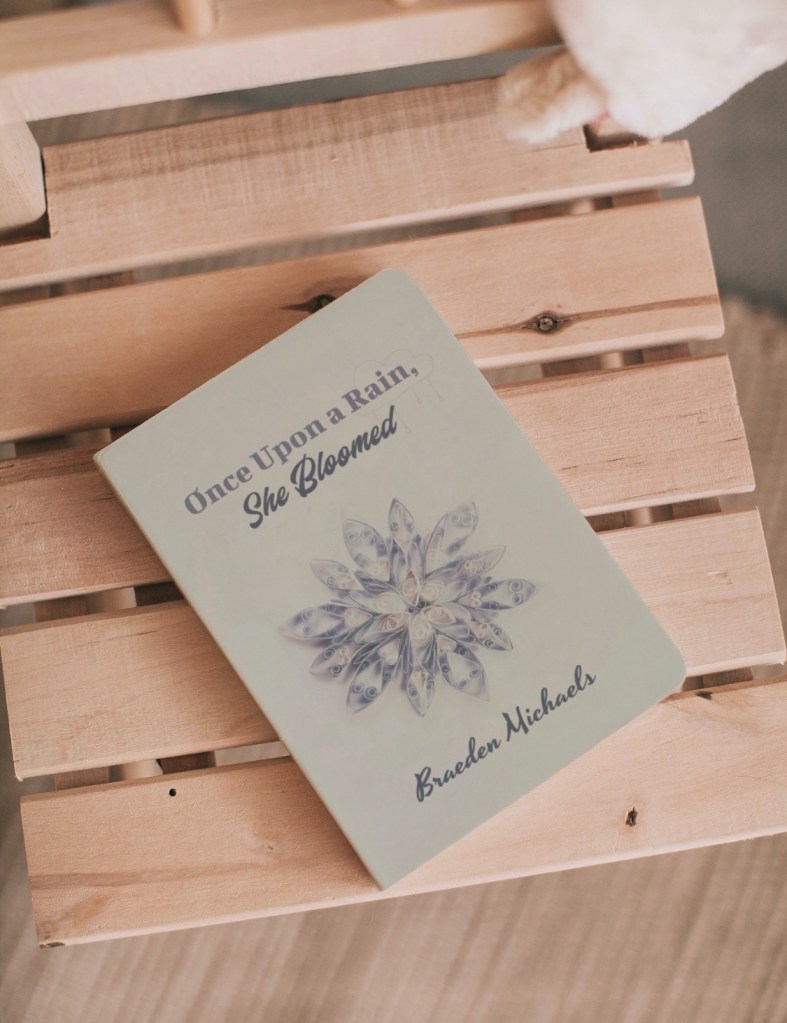
📚Once Upon A Rain, She Bloomed

Between shadows and memory, one woman’s diary elucidates relationships come and gone, those who helped shape who she is from the inside out. Turning the rain into something beautiful, the opening petals of a rose now blooming.

Veteran poet Braeden Michaels crafts his seventh collection of poetry into a mold of vision. Like pages from a twisted fairy tale, he narrates using his unique poetic style and perspective, first dissecting emotion before reconstructing and reimagining each one.


My books are available here .

Unapologetically Unashamed

I drown in my cravings, flames from your lips, and the desires from your tongue. I glare at my weaknesses with swollen tears. I hunger something that my emptiness won’t ever touch. I grip on to my fascinations and urges with insomniac eyes. I carry my loneliness on my sleeve and unapologetically unashamed for wanting your luscious skin.

The circle of my friendships get smaller, I make my myself distant the closer I get. I promise you, you will wish we never met. The hello’s will turn into goodbyes, I will make sure you can’t see the rain from my eyes. I will share more truths and you will want to run. Don’t be surprised of the person I will become.

I sink in my yearnings, scattered fantasies and the desolation inside. I dwell in my painted circles, faded memories and the opaque skies that leave me stranded in the bitterness. I am slightly disconnected, partially detached, and withdrawn from the cracks I wish not to see. I displace the stained hindrances and sanguine complaints within my state of consciousness.
I am unapologetically unashamed for longing for your sentimental touch.

The circle of my friendships get smaller, I tend to make others uncomfortable with the things I shouldn’t say. I promise you, I will belong in your past and know you won’t stay. I expect no response and the late replies. I will make sure you won’t see the pain in my fragile eyes. I will be more open and will tell you how I feel. In the end, we will find out who was real.


My books are available here .

Prologue to my new book coming out soon!

Jackknife Tavern

11:32am, situated on the corner of James Madison Boulevard and Whitman Street. I am sipping emptiness on the rocks in the scowling part of town, Jackknife Tavern. I’m sulking in the chestnut colored booth throwing darts at the bombastic God I use to love. I continue to taste the kisses of my skeptical past and shake hands with the skeleton of my future. I raise my clenched fist, “Hey brother, can you pour me another? If it’s not any trouble, make it a double.”

A Marylin Chambers look a like tapped me on the shoulders with an indecent proposal. I shook my head with a chuckle and a sleazy grin. “This isn’t a joke, I can only pay by the minutes or the number of strokes.” She disappeared like a magician with the smell of her perfume turning into an aphrodisiac. I swallow loneliness like an amber ale. Isolation is my best friend without a voice. I tend to make a midnight rendezvous with yours truly but my left hand shouts “I’m quite over zealous” and the right hand whimpers “I’m quite jealous.” I only tend to acquire sparks with jumper cables.

Between noontide and the teardrops of the moon, the carnival weaved in and out of the cavern. The hooligans are tap dancing next to the jukebox, the husbands are window shopping, the cut throat whistle stoppers are juggling negotiations and plastic speeches. The jamboree was full of exaggeration, plagiarism, copycats, and satan’s storytellers. I could hear them drinking the tears more than the alcohol.

2:35pm, the regulars and bystanders strolled in with folktales dripping grief. Cigarette smoke reeked of melancholy and satire. The ambiance was filled with extravagant bar tabs, sobbing cliffhangers, romantic comedies with the mourning saxophone playing in your left ear. If you listen close, the excuses and irritation can be heard in your right ear. A pint of desolation will taste sweet and a shot of despair will run down your throat faster than a horse at the Kentucky derby. It’s a relief and a head scratcher that we call it happy hour.

5:45pm, the eyes are dry and my stomach grumbled. The gin mill is as empty as my crooning soul. I can never make out the lyrics but I get goosebumps when I hear the sorrowful piano. Harper Guthrie struts in with his graveyard black t-shirt with the phrase “You can get this body for $19.95 for one hour, but if you act now I will make you as happy as a sunflower” printed on the front. Harper is jammed with acidic antidotes but will sell you antidepressants, antibiotics, and antisemitism.He talks with his wandering hands and pleads innocent until proven guilty. He will boast about his latest purchases, meaningless job title, and the abundant cash flow problem. He serenades to the audience that he drinks to happiness. Unfortunately, he’s been charged with terrible humor and convicted of lying to himself.

7:15pm, Jackson Bryant fumbles in with his auburn acoustic guitar. He glances at the minimal crowd from the undersized stage and begins to strum. Out comes a raspy but yet a smooth sound “You can find me in the dark trying to grip the wind, you can find me feeling lost not knowing where to begin, you can shout from the depths of your lungs, you can point your fingers at me and forget the person you’ve become.” Heads turn and faces become pale as if they seen a reflection of themselves. The song ends with the spectators clapping their hands rapidly and shouting out his name. He continued to play his set as the crowd was quite allured by his presence.

As the night begin to fade, the exchange had less of a bounce. Solitude was a fog prancing in front of our bloodshot pupils. I wrote “Goodbye, Goodnight” on a vanilla napkin and handed it to the gargoyle next to me. It was time for me to face the chorus in a song I didn’t want to play. Thirty five years ago on this melodic day, I married a ballerina that is still spinning on her tip toes of my crippled heart. The King of kings took my queen away. She was plagued with a disease that had no cure. I’m done praying to a God that doesn’t listen. All I know how to do is to fill up my glass with destitution to try to take away the overwhelming misery.


My books are available here .