Storm Fragments

I’m waiting for the day to never wake up, not because I have forgotten how beautiful the morning can be, but because somewhere between yesterday’s disappointments and tomorrow’s expectations, I became exhausted from pretending that being alive and feeling alive were the same thing. I have mastered the art of opening my eyes while keeping the rest of me asleep. I can smile with a mouth that has forgotten its language, answer questions with a voice that sounds convincingly human, and walk through a room full of people while feeling like a ghost haunting a house that no longer belongs to me. Nobody notices the little funerals happening inside a person who is still breathing. They see the body, the familiar face, the ordinary gestures, but they never think to ask what it costs to keep carrying a soul that has grown tired of its own weight.

There is a peculiar loneliness in being the person everyone assumes is fine. You become a dependable piece of furniture in other people’s lives, something they lean against when the world becomes unbearable, never considering that the wood might be splitting beneath their hands. You learn to swallow your sorrow without making a sound, to fold your disappointments into smaller and smaller pieces until they fit somewhere behind your ribs. Eventually, you forget what it feels like to speak without translating your pain into something acceptable. You become fluent in I’m tired, when what you really mean is that your spirit has been working overtime, that your heart has accumulated debts no amount of sleep can repay, that you are desperately searching for a reason to believe the next sunrise might offer something different from the last.

And the nights, God, the nights. They know everything. They know the names I no longer say aloud, the conversations I replay until their words lose their original meaning, the mistakes I have carried longer than some people carry their happiest memories. Darkness does not ask me to explain myself. It sits beside me like an old acquaintance who has witnessed every version of my unraveling and never once pretended to be surprised. I stare at the ceiling while the clock performs its small, merciless mathematics, measuring the distance between who I was and the stranger I sometimes find waiting in the mirror. Somewhere outside, the world continues its ridiculous insistence on moving forward. Cars pass. Dogs bark. Someone laughs. A refrigerator hums in the kitchen. Life carries on with an indifference that feels almost insulting when you are struggling to remember why you should carry on with it.

I wonder how many people have stood in the middle of an ordinary afternoon and quietly wished they could disappear from the responsibilities of being themselves. How many have sat at dinner tables, nodded through conversations, kissed the people they love, and hidden an entire universe of sadness behind the simple declaration that everything is okay. We are a species of beautifully disguised disasters, decorating our wounds with humor, dressing our insecurities in confidence, and calling our emotional starvation independence. We praise one another for being strong when perhaps what we need is permission to put the armor down. Sometimes strength is not another day of pretending. Sometimes strength is admitting that the weight has become too much and allowing another human being to help carry it.

I have spent too much of my life believing that I must be useful to be worthy of being loved. That I must provide something, fix something, create something, or endure something before I have earned the right to occupy space in another person’s heart. Even my sadness feels like an inconvenience, another unfinished responsibility I should have learned to manage by now. So I hide it beneath the ordinary debris of living, burying it beneath work, conversations, unfinished projects, and the thousand little obligations that keep a person occupied without necessarily keeping them whole. I become the architect of my own disappearance, not leaving the room but withdrawing the parts of myself that once made being there meaningful.

Perhaps that is what frightens me most: not that I have become sad, but that sadness has started to feel familiar. It has learned the layout of my house. It knows where I keep my memories and which floorboards creak beneath my footsteps. It sits at the breakfast table. It rides beside me in the car. It follows me into moments that should be happy, whispering that joy is temporary and disappointment has a permanent address. I know this voice is not the whole truth, but knowing something intellectually does not always make the heart believe it. A person can understand the weather forecast and still feel unprepared when the storm arrives.

Still, somewhere beneath all this accumulated darkness, there remains a small, stubborn part of me that has not surrendered its curiosity. It wonders whether there might be a morning when the light enters the room differently, when a familiar song reaches a place inside me that has been silent for too long, when someone’s unexpected kindness reminds me that I have not become as invisible as I sometimes feel. It wonders whether healing might arrive without trumpets or grand revelations, appearing instead as a cup of coffee shared in comfortable silence, a conversation in which I no longer have to pretend, or an afternoon when the future feels less like a punishment and more like an unwritten page.

I do not know when that morning will come. I am not going to insult my own exhaustion by pretending that a few hopeful sentences can dismantle years of accumulated hurt. Some wounds require more than patience; they require honesty, companionship, and the courage to ask for help before the darkness convinces us that we are beyond helping. I am learning that I do not have to solve my entire life tonight. I do not have to manufacture happiness or force myself to become the person everyone remembers. Perhaps I only need to make room for the possibility that the person I am today deserves the same tenderness I would offer someone else who was hurting.

So, yes, there are nights when I am waiting for the day to never wake up, when the thought of facing another morning feels heavier than the darkness surrounding me. But perhaps what I am truly waiting for is the day I no longer have to fight so hard to exist inside my own life. The day I can tell the truth without apologizing for it. The day I stop confusing silence with peace and endurance with healing. The day I understand that I can be exhausted without being defeated, broken without being worthless, and uncertain without being beyond redemption.

Until then, I will try to remain here for the unfinished things. For the words still waiting inside me, for the people who might need to hear that someone understands, for the small and unremarkable moments that have not yet revealed their meaning. I will try to remember that even the darkest chapter is still a chapter, not necessarily the final page. And if I cannot believe in a beautiful tomorrow, perhaps I can borrow enough belief to make it through tonight.

Maybe that is how we survive sometimes: not through grand declarations of courage, but through tiny acts of staying. One breath. One conversation. One honest admission that we are not okay. One hand extended toward someone who might understand.

I am tired of pretending the darkness does not exist.

I am tired of being the person who knows how to help everyone except himself.

I am tired of waking up carrying yesterday’s ghosts.

But somewhere beneath the exhaustion, beneath the sorrow, beneath all the words I have used to disguise what I cannot bear to say aloud, there is still a heartbeat. Quiet. Imperfect. Uncertain.

For tonight, I will listen to it.

Not because I have found all the answers, but because I have not yet discovered everything this life might still give me.

And perhaps, for now, that is enough.
I move through my days like they’ve already happened, like I am remembering instead of living, untouched by urgency, untouched by fear. Time passes without asking anything of me, and I give it nothing back. The idea of an ending doesn’t disturb me; it just sits there, distant and weightless, like a horizon I don’t feel compelled to reach or avoid.

There is a quiet in not caring, a stillness that settles deeper than sadness ever could. No fight, no resistance, just a soft acceptance that everything fades whether I hold on or not. And no one will ever know if my poetry is me or something I invented to feel less invisible, whether these words are truth or just a shape I hide behind. If my name disappears, if my breath one day simply doesn’t return, it feels no more significant than any other moment slipping by unnoticed. I exist, and then I won’t, and somewhere in that truth is a calm I cannot quite explain.

The bar breathes like an old animal—slow, practiced, familiar with survival. Not alive in any holy sense, just functional. Lights dim enough to forgive faces. Music limps between songs. The floor remembers every spill better than the people who caused them. This place doesn’t ask why you came in. It already knows.

Maynard Wells sits three stools from the end. He learned long ago that the end is a confession and the middle is a lie. He chooses the space where no one expects anything from him. His glass is whiskey because whiskey doesn’t pretend to be anything else. He didn’t need it. That never stopped him before.

Mara works the bar like a priest without absolution. She slides napkins under glasses the way you might tuck dirt over a grave—neat, respectful, temporary. She doesn’t ask Maynard how he’s doing. That’s how he knows she sees him clearly.

To his left, a couple dismantles their life in whispers. The dangerous kind—the kind sharpened over weeks. They smile for the room, but their eyes don’t participate. The man worries the rim of his bottle like it might answer back. The woman studies her drink as if it owes her instructions. Maynard doesn’t know their names, but he knows the posture of people realizing love has become labor.

Across the room, laughter blooms too loud and too fast. A cluster of friends leaning into one another, pretending gravity hasn’t started its work yet. One of them—red jacket, restless hands—keeps checking his phone. Waiting. Everyone here is waiting. They just use different excuses.

Loneliness doesn’t announce itself. It sits down beside you like it’s always belonged there. Orders what you’re already drinking. Says nothing. Maynard respects that. Silence, at least, doesn’t argue.

He tells himself he came here to write. That’s the version he prefers. The truth is messier: he came to be seen without being known. There’s a notebook in his jacket, thick with intention, thin with follow-through. It weighs enough to feel like hope without demanding proof. Writers carry notebooks the way some people carry prayers—unspoken, unfinished, still believed in.

The man at the end of the bar breaks open mid-sentence, spilling a story about a job lost or abandoned. The details shift, but the injustice remains solid. He gestures at empty air, arguing with something that left him years ago. No one interrupts. That’s the rule here. You let people speak until they’re done bleeding.

Maynard wonders what would happen if he spoke. If the truth would come out as poetry or complaint. If it would sound brave or just tired. There’s comfort in staying quiet. Quiet doesn’t get corrected.

Memory shows up wearing a familiar face. Orders the drink she used to love just to see if it still hurts. It does. She believed places like this were confessionals. Said you could hear the truth in how people ordered—neat if they were hiding, on the rocks if they were stalling, cheap if they’d already surrendered. She laughed with her whole body. Leaned in when she talked. Made strangers feel chosen. Maynard loved her for that. Hated himself for needing it. They were good until they made a sport out of wounding each other.

A song everyone knows finds its way out of the jukebox. Heads nod. Someone hums. For a brief moment, the room aligns—strangers stitched together by a chorus that once meant something in another life. Bars are good at compressing time. You can be young and old and heartbroken all at once if the music hits right.

Maynard writes: The mask slips here, but no one notices because everyone is busy adjusting their own. He doesn’t fix it. Overwriting feels like fear.

The door opens. Cold air follows a man who looks like he’s already lost something tonight. He orders a double without looking. Scans the room for a reason to stay. Doesn’t find one. Sits anyway.

Hope is quieter than people expect. It doesn’t shine. It doesn’t ask. It sits in the corner pretending it’s fine either way. Hope has learned manners.

The couple beside him stops whispering. The silence is surgical. The woman delivers a sentence she’s been sharpening for weeks. Clean. Accurate. The man nods like gravity has finally won. They don’t touch. That’s how you know something is finished—or close enough to mourn.

Mara wipes the bar, listening without collecting. Maynard wonders how many versions of the same story she’s heard. People explaining their loneliness as if it needs justification. As if it isn’t just another weather pattern.

He drinks. The burn proves he’s still capable of feeling something sharp. The glass leaves a ring on the bar—evidence that will be erased without ceremony. There’s a lesson there. He ignores it.

The red jacket starts talking about meaning. About how everyone is just trying to be less alone. His friends nod like this speech has been rehearsed in a hundred bars. He means it, though. Meaning doesn’t require originality. Just sincerity.

Maynard writes again: Loneliness isn’t the absence of people. It’s the absence of recognition. That one stays.

A siren passes outside, distant but insistent. The world hasn’t stopped just because they needed a pause. Inside, last call looms. The room groans. No one is eager to return to what’s waiting beyond these walls.

The man at the end pays, tips heavy like an apology, and stumbles toward the door. For a moment, Maynard worries about him. Then he remembers: everyone makes it home somehow. Or they don’t. Worry doesn’t change the math.

He thinks about who he’ll be tomorrow. Which stories he’ll tell. Which ones he’ll bury. This night will shrink into something manageable—a glass, a song, a feeling he never quite named. He’ll describe the bar someday and leave out the important parts because they’re too quiet to explain.

Maynard closes the notebook. Some moments don’t want to be captured. They want to be endured. He pays, thanks Mara, means it. She nods, already turning toward the next confession.

When he stands, the room tilts—not from the drink, but from the weight of everything unsaid. Outside, the street is colder and more honest. Neon buzzes behind him like a dare. He pulls his jacket tight, the notebook warm against his chest, and walks on.

This kind of night doesn’t stay behind when you leave.

It follows you.


My books are available here .

Once upon a fearful morning the light crept in like it had something to apologize for, thin and pale, as if even the sun had grown tired of announcing itself. I lay awake, not because I wanted to, but because sleep had finally decided it was done pretending to care about me. The ceiling stared back with that familiar indifference, the kind you learn from years of being misunderstood by people who claim they know you best. Somewhere, a clock ticked with the arrogance of certainty, each second convinced it mattered more than the last. This is how the lullaby begins—not with comfort, not with warmth, but with the quiet realization that consciousness is a debt that keeps compounding.

I used to believe mornings were promises. I used to think the day was a clean page, waiting patiently for the pen of intention. But pages stain easily, and intention is often just desire dressed up for an interview. Now, mornings feel like interrogations. The light asks me what I plan to do with the damage I’ve accumulated. The air asks why I’m still breathing it. Even the floor, cold and honest, asks me to justify standing. I answer none of them. I shuffle through the ritual instead, because routine is the closest thing to mercy a jaded mind can still trust.

This poem is not meant to soothe you. It is meant to hum quietly in the background, like a refrigerator in an empty apartment, reminding you that something is still running even when nothing feels alive. That’s what a lullaby becomes when you’ve outgrown sleep—less a song, more a mechanism. Less melody, more survival. I hum it to myself while brushing my teeth, while staring into a mirror that keeps aging faster than my memories. The mirror knows things I refuse to admit. It knows how many dreams I’ve folded neatly into excuses. It knows how often I’ve called surrender “acceptance” because it sounded more mature.

I learned early that hope is a beautiful liar. It speaks softly, wears the right expressions, tells you to wait just a little longer. And you do. You wait through relationships that hollow you out, through jobs that teach you the price of your time, through nights where silence becomes loud enough to bruise. Hope doesn’t leave when it’s done with you—it stays, perched on your shoulder like a smug witness, reminding you of everything you believed it would fix. That’s when cynicism arrives, not as a villain, but as a tired friend who brings coffee and tells you the truth without poetry.

Still, I write. That’s the joke. I write knowing words are inadequate, knowing metaphors don’t pay rent, knowing poems won’t resurrect the parts of me that learned how to disappear. I write because it’s the only place where my contradictions are allowed to sit at the same table without fighting. On the page, I can be gentle and bitter, hopeful and exhausted, loving and resentful—all at once. The world demands coherence. Poetry lets me fracture honestly.

There was a time when love felt like discovery. Every touch was a revelation, every promise felt hand-written by fate. Now love feels more like negotiation. Terms and conditions apply. Trauma sits between two people like a third body, listening carefully, taking notes. I’ve loved deeply enough to know how dangerous it is, and lost deeply enough to understand why people build walls and call them boundaries. The lullaby I sing myself now doesn’t promise forever. It promises survival. It says: rest if you can, leave if you must, and don’t romanticize the wounds that almost ended you.

Night used to scare me less than morning. At night, expectations sleep. The world dims its demands. Failure feels postponed. But even night has learned my name. Insomnia arrives like an uninvited editor, revising my past, highlighting mistakes, circling moments I thought I’d buried. I replay conversations with alternate endings. I apologize to people who no longer exist in my life. I argue with ghosts and lose every time. This, too, becomes part of the lullaby—the rhythm of regret, the chorus of what-ifs, the bridge made entirely of silence.

If you listen closely, you can hear the city breathing through my window. Sirens in the distance, laughter that doesn’t belong to me, engines rushing toward somewhere important. The world keeps moving with or without my participation. That knowledge used to terrify me. Now it almost comforts me. There is relief in irrelevance. There is peace in knowing I am not required to save anything today. The poet is not a hero. The poet is a witness, sometimes unreliable, often exhausted, always trying to translate feeling into something that won’t evaporate by morning.

I have been called jaded like it was an insult, as if awareness is a flaw. But jade is stone. It survives pressure. It remembers heat. If I am jaded, it is because I have been shaped by impact. I have learned to distrust shiny answers and loud certainty. I have learned that people who speak in absolutes are often hiding from their own doubt. The lullaby I sing is cautious, yes, but it is honest. It doesn’t promise that everything will be okay. It promises that you will feel everything—and live anyway.

Sometimes I miss who I was before the disillusionment, before the carefulness, before the weight. But I also know that version of me would not survive what I know now. Innocence is not bravery; it is simply untested. I have been tested. By loss. By love. By time. By the slow erosion of expectations. And still, I wake up. Still, I write. Still, I look for meaning in the small things: the way coffee warms my hands, the way a sentence finally lands, the way music can briefly rearrange the furniture in my chest.

This poem rocks itself back and forth, not to sleep, but to endurance. It says: close your eyes if you need to, but keep one part of yourself alert. The world is not gentle, and neither are you required to be. You are allowed to be tired without being finished. You are allowed to rest without giving up. The lullaby does not judge. It only repeats what you need to hear until you believe it, or at least until the morning quiets enough to be tolerable.

Once upon a fearful morning, I learned that fear does not disappear when you name it. But naming it gives you something to hold. Words are handles. Poems are containers. I pour myself into them so I don’t spill everywhere else. This is not healing in the cinematic sense. There is no swelling music, no final revelation. There is just the steady act of staying. Of breathing. Of writing another line even when the last one didn’t save you.

If this lullaby reaches you, let it sit beside you. You don’t have to sing along. You don’t even have to like it. Just know it was written by someone who has stared at the ceiling and felt the weight of waking up. Someone who understands that being jaded is not the absence of feeling, but the evidence of it. Someone who keeps writing anyway, not because it fixes things, but because it reminds him he’s still here.

And when sleep finally comes—uneven, undeserved, brief—let it. Let the world blur at the edges. Let the fear loosen its grip. The lullaby will keep humming, low and patient, waiting for the next morning, fearful or not.


My books are available here .

I want to die on my birthday, not because I hate living, but because I am tired of the arithmetic of it, the way years stack like unpaid bills, the way candles turn into tiny interrogations asking what I did with the light. On that day the calendar claps, people text confetti, and I feel like a guest of honor at my own inquest, smiling while the room waits for a speech I never practiced. Birthdays pretend to be doors; mostly they are mirrors, and I am sick of learning my face by surprise.

I want to die on my birthday the way a song wants to end on its own chord, not dragged into an encore by polite applause. I imagine the cake sweating sugar, the knife clean and ceremonial, the wishes folding themselves into paper boats that refuse to float. I imagine the room forgiving me for leaving early, the clock loosening its grip, the candles admitting they were tired too. This is not a plan, it is a metaphor I keep touching like a bruise to see if it still hurts.

Every year arrives with a receipt. It itemizes mistakes, discounts the miracles, charges interest on love. I have learned how to carry gifts with one arm and grief with the other, how to say thank you while inventorying exits. The party hats fit like borrowed confidence. Laughter behaves, obedient as a trained animal. Inside me, something feral circles the truth, asking whether survival is a habit or a choice.

If I could choose the ending, I would choose a quiet that knows my name. I would choose to lay down the weight of being seen, the exhausting labor of translation between who I am and who I perform. I would choose to stop proving endurance is a virtue. The body keeps score, they say; mine keeps ledgers, tallies nights slept in pieces, mornings stitched together with coffee and resolve.

Still, birthdays are stubborn. They keep showing up with balloons like minor gods, insisting on witness. Friends insist too, their hands warm, their eyes unsolved. Love is an interruption I never schedule but always answer. It knocks with groceries and bad jokes and the audacity to believe tomorrow is not a trap. Sometimes I let it in. Sometimes it stays.

So if I say I want to die on my birthday, hear the grammar beneath it. I want an ending that listens. I want the counting to stop hurting. I want to blow out the candles and not be afraid of the dark that follows. I want to live long enough to learn another language for staying, one where the date on the cake is not a verdict but a comma, and the sentence keeps breathing. Maybe the wish is simpler: to be held without a stopwatch, to be celebrated without being measured, to be allowed a softness that does not require proof. Maybe the wish is to keep arriving, quietly, without fireworks, learning how to stand in the year like weather, changing, survivable. If there is a gift, let it be this: another breath that does not owe anyone an explanation, wrapped, opened, kept.


My books are available here .

I’ve stolen a bottle of valium and borrowed the razors edge from my awakening nightmare. I’ve stolen kisses from the fox in the evergreens and borrowed someone else’s heart. I’ve stolen credit cards with a different name and borrowed carelessness from the devil himself. I’ve stolen the answers from a book I’ve never read and borrowed peace from a saint. I’m just exhausted from being me.

When I’m me, people walk away. No one cares what I say. I couldn’t pay someone to listen and my emptiness knows what I am missing. I continue to sit here in the bone chilling dark, with the outline of a pitch black heart. When I’m me, I can’t see.

I’ve stolen a sparkling personality from an angel I desired and borrowed humor from a treasured jester. I’ve stolen money from my tight fisted friends and borrowed character from rambling strangers. I’ve stolen beauty from the broken and borrowed ugliness from the exclusive. I’ve stolen the truth from a lawmaker and borrowed lies from the divine. I’m just exhausted of being me.

When I’m me, people laugh in my face. It’s clear that everyone can take my place. I couldn’t pay someone to wipe away my tears as I am drowning in my fears. I continue to sit here in my ocean of loneliness, with every aspect of my existence is a mess.


My books are available here .

Every drink has a confession

At the Jackknife Tavern sits a man, drinking his loss of love away. Beside him come and go a myriad of faces, men and women with lives sometimes down and out, perhaps sad, at times inspirational, always human. These are friends and neighbors, acquaintances, coworkers… Each with their own story to tell. The poet remains on his barstool, taking notes and creating art from life. Award-winning author and poet Braeden Michaels treats us to his eighth collection of prose poetry.

Available on Amazon! 📚


My books are available here .

Available on Amazon!

Play the link! This is a song about my book!

https://suno.com/song/35278878-1910-4b84-9c22-6191f7d52dd1


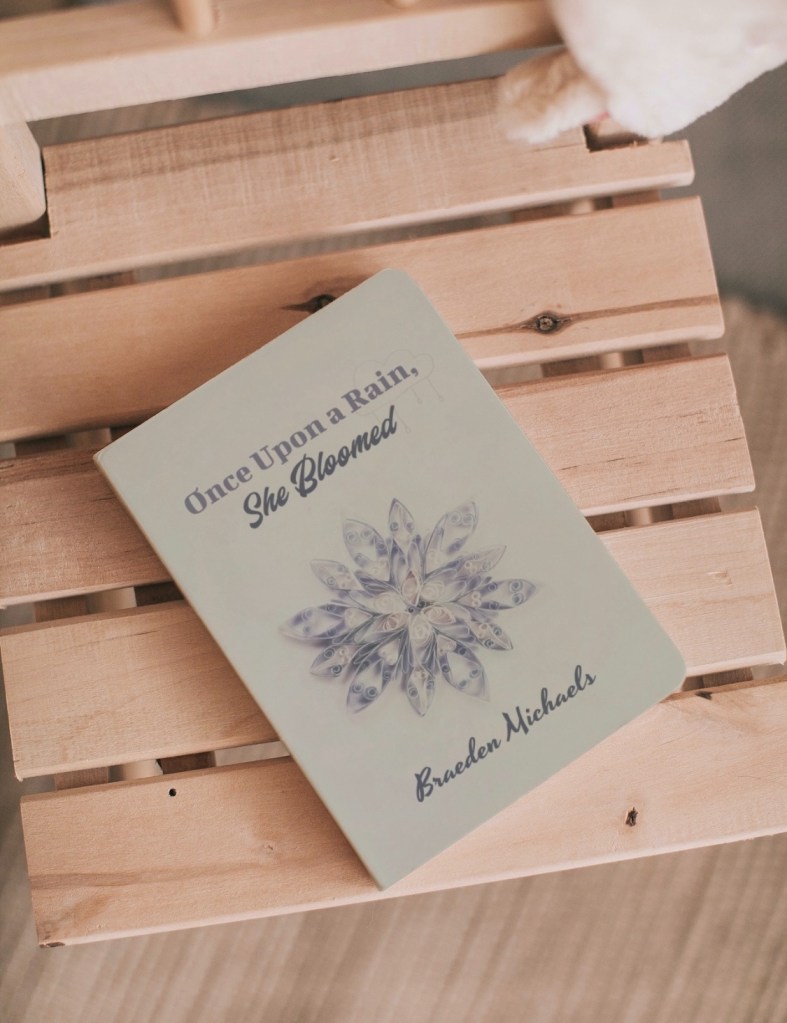
📚Once Upon A Rain, She Bloomed

Between shadows and memory, one woman’s diary elucidates relationships come and gone, those who helped shape who she is from the inside out. Turning the rain into something beautiful, the opening petals of a rose now blooming.

Veteran poet Braeden Michaels crafts his seventh collection of poetry into a mold of vision. Like pages from a twisted fairy tale, he narrates using his unique poetic style and perspective, first dissecting emotion before reconstructing and reimagining each one.


My books are available here .

Growth is powerful. Often times you can’t see how much you have grown until you look back at who you were or what you have decided to let go. I have been writing for decades and have kept it a secret. Why? The reasons why I write are endless. It’s therapeutic, mentally stimulating, challenging, a place where I can voice my opinions, and today I believe others can find others or themselves in my poetry.
It can be a place of self discovery and reflection.

Generally speaking, the perspective of a poet by society is someone who is broken, emotionally sensitive, and their voice is better articulated through words on paper than being spoken. To clarify this, written words are better used to express themselves emotionally. I can relate to this part. I am an emotional person and often times I cry because I have no words at times. Today I write with more of bigger purpose. I want to show the world that you people are not broken, they are just misunderstood. They are not surrounded by the right people.

At the end of my first marriage, I took it upon myself to attend therapy. I knew there were some things about me I needed to fix. I am a work in progress, in fact we all are a work in progress and under construction. Two of the things in my marriage that I needed to work on was speaking up for myself and taking control of certain aspects of my life. I was married to a woman who was overbearing, domineering and controlling. She was also an alcoholic. On my end, I wasn’t mature enough to walk away and sought out attention in the wrong way ways. I hid my writing at this time. Therapy gave me guidance and direction.

One of the things that I learned in therapy is that my growth was limited due to my surroundings. My father is quite judgmental and critical. Once I remarried and moved away, my confidence in myself flourished. I saw that I needed to move away. I will never tell my father that because I know that would hurt his feelings. I appreciate all that he is given me and the love that he knows how to give. He doesn’t just seem to care how to present sensitive topics, and how you present them often times is more important than what you say. As I get older, I’m trying to be aware of how I present subjects as well. There is a time to be straight forward, direct and there is a time to communicate with compassion.

In the end, I have grown to try to see the world and life through others eyes. I am not dead set on being right and if I am wrong, I will own up to it. I write poetry from the clouds with eagle eyes and try to embrace humanity. I see humanity without labels. There is a long list of individuals who want the world to change and I stand in a small line where I want to change the world. Everything is perspective and perspective is everything.


My books are available here .

Lukewarm Coffee

I found the most reckless line in your diary. “I know you can’t remember, all I can feel are the tears of September.” l was mesmerized by the details of the most piercing moments until I realized I was the subject. I was perplexed and the inner light began to fade. I found a line that shredded my heart into pieces.”You are the avalanche I could not see, you won’t be awake when I leave.” I glanced through the suffering and the realization is settling that you see me as a self absorbed monster.

You drank lukewarm coffee with a ballad crying in your head, rearranging the lyrics, forgetting all the things I said. You replaced conversation with an awkward silence and grand expectations. Perhaps you and I sat on quicksand, never making a solid foundation. You wanted me to crawl inside your mind, sit indian style, and look for your missing smile. You never mentioned, you craved endless attention and you didn’t get what you deserved. If I didn’t love you, can you tell me why I’m so hurt.

I found your latest entry in your book of fiction. “I know you forgot about my horrendous childhood, feeling lost and misunderstood.” I was fascinated with your chilling imagination with minutia painted with your fingertips. I was bewildered and the answers began to become in focus. I found a line that cracked the outer shell of my soul. “You are the villain in this horrific tale, because of you I have failed.” I am done tasting this bitter and water down concoction.

You drank lukewarm coffee with complaints, criticism, and tirades surrounding your silent skeleton. You are the playwright, weeping dramatist, and the author of colorful exaggerations. You are the puzzle, desiring me to put you together, believing in the everlasting, wishing for forever. You are numb from the waist down, with your feet barely touching the ground. You blame me for that earth shattering tragedy. I will love you until the end of time despite the fact you are no longer in love with me.


My books are available here.

excerpt from “The Raven’s Poison”

Indecisions hide like bats in the echoes of the cave
Uncertainty sips from the acidic river
Vinegar seeping between the crushed bones and sharp nerves
Isolation and desolation are thumbs ripped from each hand
And the rattle lingers in the corner of the ear drum

Dismay is tucked away behind a faded curtain
Flaws stick to me like starving fleas
Substance is the saliva dripping from the piranha’s teeth
The equilibrium inside me wakes up the storm
And the rattle parades in a rhythm that disturbs the haze

Symptoms of a nontransparent disease spread
Inside the soliloquy the cage embraces the thunder
Murmurs and grumbles tremble with fright
Theology and myths walking in unison
And the rattle pounds like a headache

Butchered insults and splinters drive three inches through my anger
Crude laughs and vicious skies open up
pouring sadness
Exasperation drags my eyelids through the dirt
Sorrow is a creek that I cleanse the silence
And the rattle pierces my aching skin

And I lay here with the rattle in the cage soothing the emptiness


My books are available on Amazon.

Forget me not, my sweet fears
I found untouchable verses within my discomfort
I found veracity within the crevices of the dark
I found my reflection staring into my tattoo of courage
I found emptiness deeper than this bottle

And my tears dry up and it’s time to stand up
And my anxiety carries a heart beat
And my passion bleeds forever more
And my endless ink soars like a blackbird

“Take my hand, I can no longer do this alone.
I can admit, I can no longer do this on my own”

Forget me not, my sweet fears
I found my imagination spinning out of control
I found my recklessness ripping me at the seams
I found my identity buried in a grave with a bouquet of havoc on top
I found my revelations reading scripture

And my tears dry up and it’s time to stand up
And my anxiety carries a heart beat
And my passion bleeds forever more
And my endless ink soars like a blackbird

“Take my hand, I can no longer keep hurting myself,
I can admit, something inside needs some help”


My books are available here.

The Forgotten Ghost (Thomas Pride)

It’s 5am, I’m carrying those restless thoughts like a backpack over my shoulder. I’ve tumbled through an existence with my freudian slips, gray instincts, and coarse satire. I’ve been dripping misery on the edges of my inner shell. I’ve been playing with matches with ten foot flames higher than my self doubt. Take a long long look at me and you may see yourself. The only distinction is that I’m not afraid to seek for help.

I was the ghost that you were afraid at the age of five.Remember when I made you smile when you wanted to cry. I was there when your world caved and you couldn’t move. I was there when the doubters left and shouted “you have nothing to prove.” I was there when your scenery started to change. I was there when you took all the blame. Here we are, seeing nothing is the same. Where does the ghost go from here?

It’s 5am, I’ve got nonsensical riddles on display and the Gods are poking fun at the answers. I’ve been talking to myself with a straight jacket and heckling the clowns in the audience because it feels like I’m on stage. I stumble with society because I force rhymes because I’m staring at a blank page. Take a long look at me and you may see yourself. The only distinction is that I’m not afraid to seek for help.

I was the ghost you made love to at the age of sixteen.Remember when I held you in my arms in silence when your nightmares wanted to scream. I was there when your world crumbled and you couldn’t move at all. I was there when the people around you started to build walls. I was there when the colors of your painting started to fade. I was there when your soul needed to be saved. Here we are, everyone is gone and I remain.Where does the ghost go from here?


My books are available here.

That’s the way the addiction grumbles
That’s the way the drunk stumbles
That’s the way the moon serenades
That’s the way the elephants walk in the parade
That’s the way the politicians talk
That’s the way the predators gawk

That’s the way the innocent dream
That’s the way the raped scream
That’s the way the fears surrender
That’s the way the cold remembers
That’s the way the lost are found
That’s the way the veterans weep to the sounds

That’s the way the truth should be told
That’s the way the lies are bitten and sold
That’s the way the victim cries
That’s the way the quiet feel inside
That’s the way the impregnator stares
That’s the way the son of a bitch cares

That’s the way the glass is poured
That’s the way the children are ignored
That’s the way the perception is skewed
That’s the way the label is crude
That’s the way the society thinks
That’s the way the one percent drink

That’s the way the air becomes stale
That’s the way the skin becomes pale
That’s the way the poets write
That’s the way the day turns into night
That’s the way the heart breaks into bits
That’s the way the last puzzle piece fits

That’s the way the thunder growls
That’s the way the thieves prowl
That’s the way the light disappear
That’s the way the dark becomes crystal clear
That’s the way the luck falls
That’s the way the anger crawls

That’s the way the perpetrators finger points
That’s the way the hippies smoke a joint
That’s the way the teacher dresses
That’s the way the students make messes
That’s the way the winners gloat
That’s the way the captain steers the boats

That’s the way the rich treat the poor
That’s the way the small companies closes its doors
That’s the way the snake rattles
That’s the way the beast fights in battle
That’s the way the cookie crumbles
That’s the way the insider fumbles

That’s the way the performers act
That’s the way the sky becomes black
That’s the way the song is heard
That’s the way the villains see the words
That’s the way the view turns into stone
That’s the way the virtuous become alone

That’s the way the branch breaks
That’s the way the dealers make mistakes
That’s the way the world divides
That’s the way the humans collide
That’s the way the people see
That’s the way the universe will be


My books are available here.

She use to be my enraptured muse
A mystical raindrop that drenched my entirety
guided by purity, kindness and authenticity
unveiling the sentiments in navy ink
written in the coveted firethorn notebook

In the afterglow she disappeared
Stillness was the enemy

She use to be the prayer between both hands
A snowflake cleansing my weary tongue
navigated by a sweet hummingbird whistling
displaying the verses with a keen eye
penned in a diary surrounded by flames

In the afterglow she vanished
tranquility was the rival

She use to be my northward carnival
A buzzing gypsy crooning in my orchestra
maneuvered by truth, sympathy and light
revealing the lines with unseen impressions
authored in a journal of mysterious flare

In the afterglow she escaped
serenity was her shadow boxer

I couldn’t make her remove her beloved wings


My books are available here.

Between the Verses and the Ink Vol. 1

Selected poems from each of Braeden Michaels’ first five books of poetry:

“The Raven’s Poison” – a full collection characterizing and describing all aspects of the human condition and emotions.

“Stella Walker’s Acquaintances” – character poetry surrounding the friends and acquaintances of a widowed woman as she reflects upon her life.

“Unpaved Crossroads” – poetry which depicts various scenes and moments in time, with a common theme of specific place throughout.

“Growl from the Sun” – a collection of political poetry including Michaels’ magnum opus of the same name, opining governmental and civic current events.

“For You, Love Always” – heart-touching and emotionally moving poetry for lovers.


My books are available here.

I’ve watched you become the acrobatic apologist
I’ve heard about the yellow fellow who broke your melodic heart
I’ve recited the third page from your journal pertaining to your inadequacies
For your wounds will heal in the garden
I stand as your protector, silver shield, and the knight in the desert
My love for you is a basket of gold
I’ve witnessed the boy who cemented crippling demands
I’ve stared at the smeared carmine lipstick
on your oval mirror and that reads
“The chip on my shoulder weighs a ton”
I’ve scolded the gentleman who made claims of manhood
For your discolorations will be cleansed
I stand as your defender, eagle’s eye, and sword
My love for you is fearless and is a scent of heaven
I’ve growled at the heathens who replaced love with immaturity and lust
Daphne, my beloved, your fantasies and dreams are sacred
Your darkness can shine in our universe


My books are available here.

Suffocating winds,
drowning in a venomous and callous night
gripping to a malignant affair
shredding overblown letters of sensuality
my esophagus is bound to split

“I’m on my knees, begging please, with forgiveness slicing my tongue, aching to breathe.”

Sounds of vanishing ripple
Sounds of exhaustion sob
Sounds of agony growl

Suffocating winds,
immersed in worth with scabs and pockmarks
consumed by a rain of affliction
ripping flashbacks with endless tears
my esophagus is bound to rupture

“I’m on my knees, begging please, with forgiveness piercing my eyes, aching to breathe.”

Sounds of distress shrivel
Sounds of loneliness escape
Sounds of tears shriek


My books are available here.

Pitch Dark Soliloquy

“Carnival sins, I lay in your distress and only see myself as a bomb. Carnival sins, I don’t take responsibility for my ignorance and indifference. Carnival sins, I clutch on to my weaknesses and dwell in the shadows. Carnival sins, I see the clowns but recognize I’m the jester without a smile carrying a plastic laugh. Carnival sins, I bleed poetry that you can’t comprehend and my tears fall within the metaphors. Carnival sins, I’m dying on the inside and my wretched skin is peeling. Carnival skins, I am a color you wish that never existed. Carnival sins, I plead guilty for not loving my identity. Carnival sins, I don’t sleep in your coffin but dance in your cemetery. Carnival sins, my tears are deaf and the silence is scorching. Carnival sins, don’t you feel what i feel? Carnival sins, I am the wind you can’t feel. I am the enigma that awakens your nightmares.”


My books are available here.

Beauty of my Chaos (Brittany Waters)

I stopped searching for answers in the corridors and the empty halls. I stopped searching for whispers where my frustrations growled. I stopped searching for innocence where scars burned. I stopped searching for the lullaby on the carousel and in the carnival. I stopped searching for the exclamation point in this longwinded sentence. I stopped searching for the dreams that evaporated and the hollow river I never felt. But I struggled to find beauty in my chaos.

I stopped searching for the acknowledgement from the copycats, finger pointers, and instigators. I stopped searching for my identity within the affection of lovers and takers. I stopped searching for pieces in a whirlwind of anxiety. I stopped searching for forgiveness from acquaintances with an image. I stopped searching for devotion from perfectionists. I stopped searching for laughter in cursed temptations. I stopped searching for beliefs with the unblemished appearance. But I struggled to find harmony in my imbalance.

I stopped searching for approval from rambling critics. l stopped searching for flames with sky-scraping expectations. I stopped searching for peace where there was social combustion. I stopped searching for engagement that turned lethal. I stopped searching for
supremacy within my crumbling doubt. I stopped searching for loyalty from nonbelievers. I stopped searching for kindness from callous hearts. But I struggled to find charm in my flickering character.


My books are available on Amazon.